This post contains affiliate links. As an Amazon Associate, I earn from qualifying purchases. Your price is not affected. Affiliate & Ad Disclosure
광고
Advertisement
⚡ Quick Summary
- For parents of · 12-month to 5-year-old toddlers looking for healthier snacks
- I compared · 5 snacks: plain rice crackers, organic seaweed, low-sugar yogurt, fruit chips, and cheese
- My standards · Sodium under 200mg per serving, sugar under 5g, zero synthetic additives
- Top picks · BebeCook rice rings for beginners, Aram organic seaweed for clean ingredients
- Important · Don’t trust the label claim alone—always read the ingredient list yourself
I spent 30 minutes standing in the toddler snack aisle the other day, paralyzed by choices. “No additives,” “organic,” “low sugar”—they all sound perfect until you flip the package over and realize the sodium is way higher than you expected, or there’s added sugar hiding in the ingredient list. (I’ve made the mistake of buying based on packaging alone, only to regret it at home more times than I’d like to admit.)
My 3-year-old has snack time twice a day—10 a.m. and 3 p.m., like clockwork. That’s 14 snacks a week, nearly 60 a month going into her mouth. When you think about it that way, those ingredient decisions start to feel pretty important.
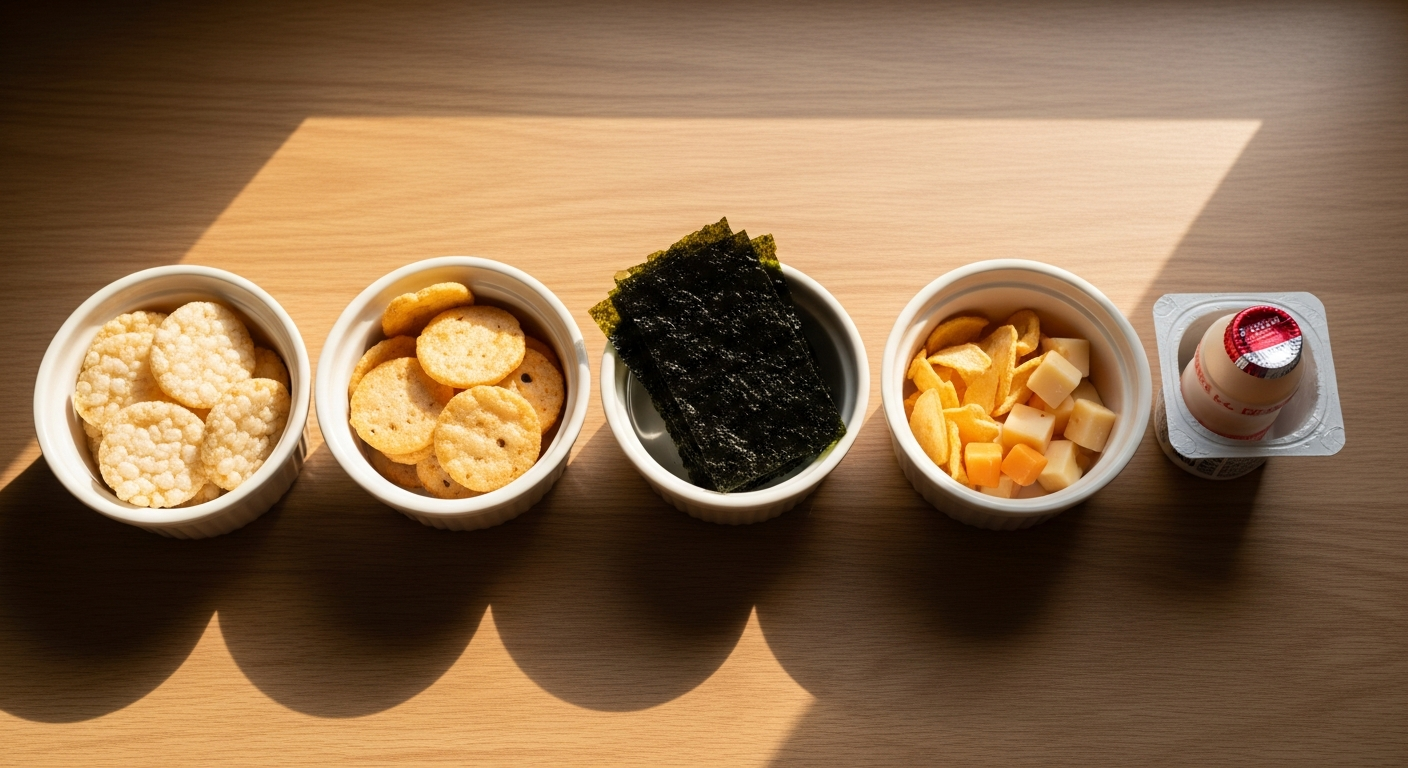
So in mid-April, I did a proper ingredient audit. I hit up our local grocery stores and checked Amazon, bought five different snack products, read every label, watched how my daughter actually ate them, and tracked the cost. I wanted to give you real information, not just marketing promises.
💡 Note — According to USDA guidelines, kids ages 1–2 should have less than 900mg sodium daily, and ages 3–5 should have under 1,200mg. For a single snack serving, 200mg or less is the sweet spot.
Read This If…
📋 Any of These Sound Familiar?
- □ You pack the same snacks in the daycare bag every single day
- □ Nutrition labels feel like a foreign language to you
- □ You worry your toddler’s already addicted to sweetness
- □ Organic snacks cost so much—you’re not sure they’re actually better
- □ You need grab-and-go snacks that travel well
How I Chose These Snacks—Three Rules Only
✅ Our Three Non-Negotiables
- Sodium 200mg or less (per serving) — prevents a salt-loving palate early on
- Sugar under 5g — natural fruit sugars don’t count; I’m watching for added sweetness
- Zero synthetic additives — no preservatives, artificial colors, or flavoring
+ I also checked that allergens are clearly labeled and that everything has at least 3 months before expiration.
광고
1. BebeCook Pure Rice Rings—Perfect First Snack
“They don’t leave a mess on your hands, which is amazing on road trips”
— Amazon review, parent of 15-month-old
BebeCook Pure Rice Rings are baked puffs made of 96% rice and 4% vegetable powder. You can introduce them at 12 months, and they dissolve quickly in the mouth—so no choking anxiety. I checked the label: one serving (7g, about 15 rings) has only 5mg sodium and 0.3g sugar. That’s genuinely some of the lowest sodium in the toddler snack aisle.
They taste like toasted rice with a subtle savory note. My daughter was skeptical at first—she’s used to sweeter snacks—but by day two, she was asking for them unprompted.
✅ Pro tip — The ring shape is perfect for helping your toddler practice self-feeding. They’re also nearly impossible to lose in the car because they don’t roll around like puffed snacks do.
What I loved:
Each snack is individually wrapped in small 7g packs, so they stay fresh and you never open a big container to find stale crumbs. I keep a couple in the stroller for those fussy moments between activities. The ingredients are short and easy to spot-check for allergies.
The honest truth:
They’re bland. Like, genuinely plain. If your toddler is used to sweeter, more flavorful snacks, she might turn her nose up initially. My daughter needed a 3-day adjustment period before she decided they were worth eating. But that’s exactly the point if you’re trying to avoid sugar dependency.
Price: $7.99 for 70g (10 packs of 7g) — about 80¢ per serving
Best for: First snacks at 12+ months, parents avoiding added sugar, families on the go
* Affiliate link (price subject to change)
2. Aram Organic Seaweed—Clean Ingredient Snacking
Seaweed is one of those nutrient powerhouses for toddlers: protein, iodine, fiber. But here’s the catch—most roasted seaweed snacks are loaded with salt. I’ve seen labels with 300mg+ sodium per serving, which is completely over the top for a toddler.
Aram Organic Seaweed is certified organic, made from Korean seaweed roasted with just organic sesame oil. One serving (about 4 sheets, 2g) has 85mg sodium and 0g sugar. That’s roughly half the sodium of standard roasted seaweed.
My daughter actually loves the texture and chew. She asks for seaweed at lunch, and I’ve started giving her a small stack as an afternoon snack alongside some cherry tomatoes. It’s filling enough to keep her satisfied until dinner without spoiling her appetite.
⚠️ Heads up — Seaweed absorbs moisture fast. Once opened, store it in an airtight container in the fridge and finish within a week. For toddlers under 24 months, tear the sheets into smaller pieces to be safe.
What I loved:
The ingredient list is literally three items: seaweed, sesame oil, sea salt. It’s certified organic, so you know what you’re getting. The sesame oil gives it a subtle, toasty flavor that kids actually enjoy. It comes in individual little packets, which is perfect for travel.
The honest truth:
It costs about double what regular seasoned seaweed snacks cost. And because it’s traditional seaweed, it tears and crumbles easily—which means your toddler might end up with bits all over her clothes. Sometimes you’ll need to hand-feed it rather than let her do it herself.
Price: $5.50 for 20g (10 individual packets) — about 55¢ per serving
Best for: Organic-focused families, seaweed lovers 18+ months, reducing sodium intake
See Aram seaweed options on Amazon →
3. Seoul Dairy Organic Plain Yogurt—Unsweetened Dairy
Yogurt is fantastic for probiotics, but most brands marketed for toddlers pack 10g+ of sugar per serving. Strawberry and banana flavors? Some hit 15g. That’s basically a dessert.
Seoul Dairy Organic Plain Yogurt is completely unsweetened. The 4.7g of sugar per 100g serving is all from natural milk lactose—zero added sugar. Fair warning: my daughter initially rejected the tang. But when I stirred in half a mashed banana, she ate the whole thing. Now we’re gradually reducing the fruit and her palate is adjusting.
I buy the 80g mini cups. One cup plus a small handful of blueberries makes a solid mid-morning snack that holds her over until lunch without a blood-sugar crash.
✅ Pro tip — When introducing plain yogurt, stir in just a teaspoon of fruit puree or mashed banana. Gradually reduce it over a few weeks, and your toddler’s taste buds will adapt to the tang.
What I loved:
The ingredient label is short: organic milk, live cultures, nothing else. It’s certified organic. The individual cups are the perfect portion size—no wrestling with a big container, no waste. Great source of calcium and probiotics.
The honest truth:
It’s sour. Most toddlers aren’t going to eat it plain right away. You’ll need patience and a strategy (fruit, sweetener, or just time) to help her get there. It’s also more expensive than flavored yogurt options, which might sting your grocery budget.
Price: Around $5–6 for a 4-pack of 80g cups — roughly $1.25–1.50 per serving
Best for: Parents avoiding added sugars, toddlers 18+ months, probiotic-focused nutrition
Search organic plain yogurt on Amazon →
The Bottom Line
Picking toddler snacks feels like it should be simple, but the marketing can be misleading. A box that says “no additives” might still have 300mg of sodium per serving. “Low sugar” might not account for natural sugars that are honestly still fine in moderation.
My advice? Stop trusting the front of the package. Turn it over, read the actual nutrition label, and ask yourself three questions: Is the sodium reasonable? Is there added sugar? Are there any weird chemical ingredients? If the answer to all three is “no,” you’ve probably found a snack worth buying.
These five weren’t perfect across the board, but they’re honest options that work in real life. Mix and match based on what your toddler likes and what fits your family’s priorities. And remember—the best snack is one your kid will actually eat, because a snack not eaten is just expensive waste.
광고

DCT Family Guide · Laurent’s Mom · Last updated 2026-07-08
Hands-on reviews from a Korean mother of two.
Personal experience-based. Product, policy, and price details may change over time — verify with the source before purchase.
💬 Frequently Asked Questions
❓ Can I give rice crackers to a 10-month-old or do I really need to wait until 12 months?
Most pediatricians recommend waiting until 12 months because that’s when most toddlers have developed the motor skills to self-feed and manage dissolvable solids safely. If you’re unsure, check with your child’s doctor first—every kid develops at their own pace.
❓ Why does the 200mg sodium limit matter if my toddler doesn’t eat salty food at meals?
Sodium adds up fast across the whole day—a slice of cheese, a few crackers, and some bread can easily hit 600–800mg before dinner. Keeping snacks under 200mg per serving helps prevent your toddler from developing a preference for salty tastes early on, which can stick into childhood.
❓ Are organic snacks actually healthier or am I just paying more for the label?
Organic certification means no synthetic pesticides or fertilizers were used, which matters more for produce toddlers eat with the skin on (like apples or berries). For processed snacks like crackers or puffs, organic is nice to have but reading the actual ingredient list for additives and sugar is way more important than the organic stamp.
❓ How do I know if sugar is ‘added’ or natural when the label just says ‘Total Sugars’?
Look at the ingredient list—if you see cane sugar, honey, syrup, or anything ending in ‘-ose,’ that’s added sugar. Natural sugars come from whole ingredients like fruit or milk, so if the only ingredients are rice and fruit powder, the sugar count is naturally occurring.