This post contains affiliate links. As an Amazon Associate, I earn from qualifying purchases. Your price is not affected. Affiliate & Ad Disclosure
광고
Back in early January, my daughter Lauryn came home from preschool saying that her backpack felt too heavy. At five years old, kindergarten is still a year away, but these days even preschool packs in books and supplies. So I decided to start researching elementary school backpacks ahead of time—she’ll need one soon enough anyway.
The problem? I had no idea which backpack would actually be comfortable on her shoulders. Every brand promises “ergonomic design” and “weight distribution,” but after just a few days, Lauryn would come home with red marks on her shoulders or complaining that it hurt. (I’ll be honest—I’ve made expensive mistakes by trusting brand names before.)
This time, I decided to do a real comparison. I had Lauryn rotate through five different backpacks over three weeks, carefully checking for shoulder marks, weight feel, and overall comfort. In the end, only one avoided leaving any marks at all. The other four each had their own drawbacks.
Five Things I Checked Before Testing
Before diving into the comparison, I mapped out what actually matters in an elementary school backpack. Picking based on cute design alone? That’s a recipe for regret.
First up: shoulder strap width and padding thickness. You need at least 2 inches wide with at least 1.2 inches of padding for proper weight distribution. Second is the strap material itself—if it’s too smooth, it slides right off. Mesh backing or a non-slip finish is essential.
Third is the back panel structure. Kids’ spines aren’t as strong as ours, so the back needs real cushioning so book corners don’t jab directly into their backs. Fourth is storage layout—sure, a huge main pocket sounds good, but multiple smaller pockets are actually way more practical for finding things quickly. Finally, the backpack’s own weight should ideally be under 1.75 pounds, though I learned that how it sits matters more than the number on the scale.
Week 1: Trusted the Brand, Got Red Marks on Day One
The first backpack was from a popular children’s brand. It had tons of reviews on Amazon, and everyone called it an “essential for kindergarten.” It was mid-priced around $50, and came in a sky blue that Lauryn loved.
The problem showed up immediately. When she came home from preschool on day one, her shoulders had bright red marks. The straps were thin and barely padded, so the entire weight concentrated on one tiny pressure point. Lauryn said it hurt a little. That stung—I realized she might have been quiet about discomfort on other days too.
The backpack itself was light at around 1.3 pounds, but once we added two books, a pencil case, and a water bottle, it jumped to about 3.3 pounds. All that weight pushing down through skinny straps? Red marks were inevitable. After a week of the same problem, I knew it had to go.
The marks were worst in the late afternoon when I picked her up. Fine in the morning, but pressure builds over the day. When I measured the straps, they were only about 1.2 inches wide—nowhere near the 2 inches I’d decided was a minimum.
Week 2: Wide Straps, But They Just Slid Right Off
The second try was an international brand. The J World New York Ernest backpack looked promising—wide padded straps and good cushioning. Around $60 and 17 liters, it seemed right-sized for early elementary.
And honestly? It delivered on the shoulder marks. The padding actually distributed her weight well. But the straps kept sliding off her shoulders. Every time she ran around or climbed stairs, one strap would slip down. She’d say “Mom, it fell again” three or four times a day.
The issue was the smooth nylon material—not enough grip against her jacket. Winter padding made it worse. Later I found out that strap backs need silicone grips or textured mesh to stay put. This one was pretty on the outside but had nothing on the inside to catch. I adjusted the length as short as I could, but with an active five-year-old, short straps weren’t enough.
Week 3: Light as a Feather, But Her Back Hurt
The third backpack was a lightweight option from a domestic brand. The Winghouse Feather came in at just 1 pound—seriously light. Around $35, and simple enough for any kid. Perfect deal, right?
After a few days, Lauryn said her back hurt. Turns out the back panel was just thin foam, so when we put in textbooks, the spine corners pressed straight against her back. Hardcover picture books were the worst—they’d poke right through. She said it felt like the pressure went all the way to her ribs.
The shoulder straps were decent and the padding was fine, but the back panel was a dealbreaker. When Lauryn started saying “I don’t want to wear this backpack,” I knew I’d made a mistake chasing the weight number instead of the actual design.
That’s the trap with ultralight backpacks—to save weight, they cut corners on back cushioning. It feels okay when you press on it in the store, but six hours of books pressing into a kid’s spine? That’s real. Elementary textbooks are thicker and heavier than I expected, and that back support is non-negotiable.
Backpack Four: Cute Character Design, Terrible Organization
The fourth pick was a character-themed backpack that Lauryn actually chose herself because she loved the design. Around $55, it held 15 liters—a bit snug but manageable.
The straps and back panel weren’t bad. Good padding, no slipping. But the storage was a nightmare. One massive main pocket and just one tiny outside pocket. There was nowhere to separate her pencil case, water bottle, or tissues. Every morning she’d ask “Mom, where’s my pencil case?” and I’d watch her dig through the entire bag.
The character design she loved wasn’t enough to make up for it. When you’re rushing in the morning and everything’s mixed together, even a five-year-old gets frustrated. “I don’t like this backpack,” she finally said. I learned the hard way: cute on the outside doesn’t beat functional on the inside.
Backpack Five: The One That Actually Worked
The last one was the Fila Kids Ergonomic backpack. Pricier at around $70, but the reviews all said one thing: “No shoulder marks.” I took a chance.
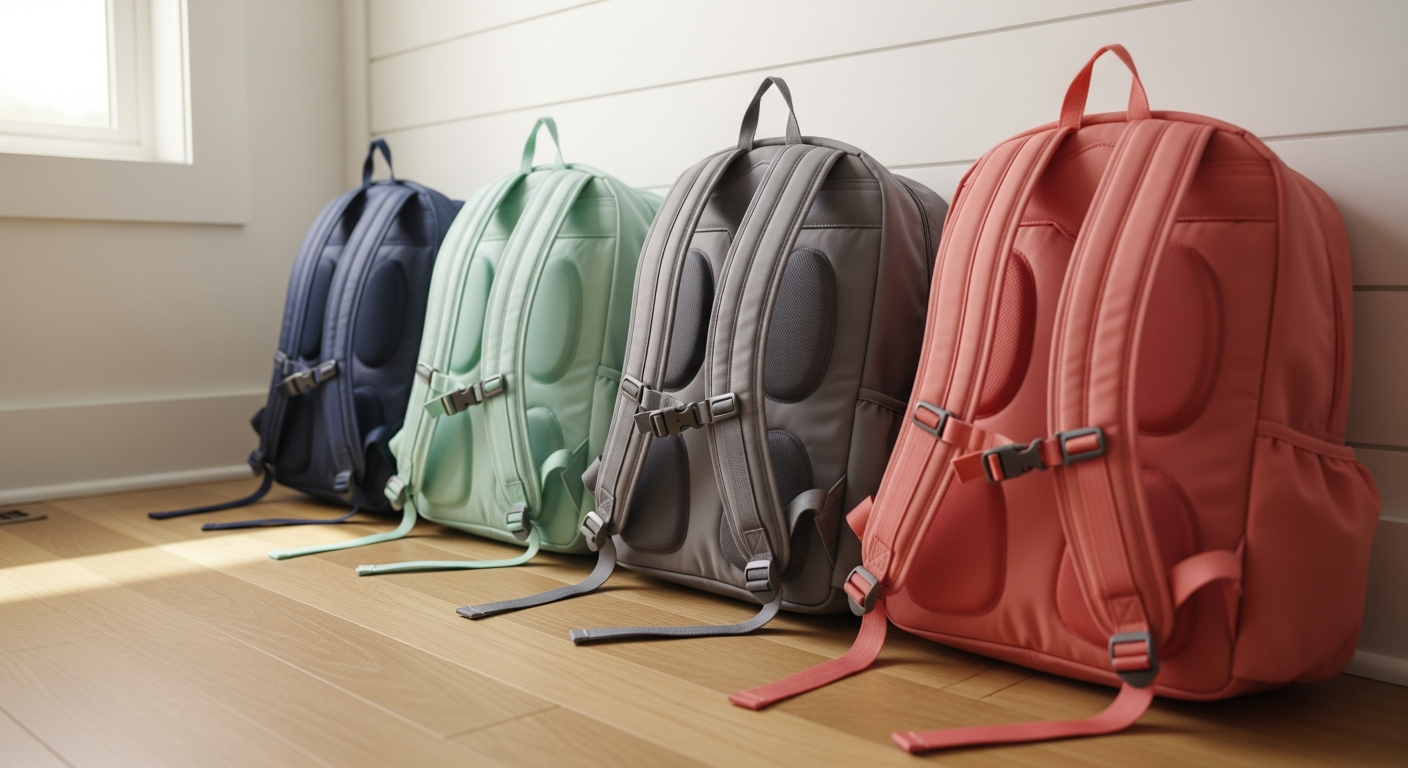
For three straight weeks, Lauryn wore it with zero red marks. Not once. The shoulder straps curve in an S-shape that actually follows a kid’s shoulder line, and the padding is a full 2 inches thick. The back has mesh panels to keep air flowing, and the back edges are textured so they don’t slip. A chest clip and waist belt distribute the load so her shoulders aren’t carrying all the weight alone.
When I asked if it hurt, she said “This one doesn’t hurt at all, Mom.” That settled it for me.
The storage is genuinely useful too—two main pockets, two side pockets, and a front zippered pocket. The side pockets have stretch, so her water bottle stays secure and doesn’t fall out. She could actually find things. And she took pride in snapping that chest clip every morning, which meant she was actually using all the features.
Sure, it weighed about 1.6 pounds, heavier than some others. But the fit was so good that it felt lighter than the supposedly lighter options. That’s the real lesson: perceived comfort beats the scale.
Why Red Marks Happen in the First Place
After comparing five backpacks, I figured out the three main causes of shoulder marks. First, narrow straps concentrate pressure into a thin line. You need at least 2 inches of width to spread the weight across her whole shoulder.
Second is padding thickness. A wide strap with thin padding still pushes hard. You need at least 1.2 inches of soft material to actually cushion the load. Third is strap angle—straight straps don’t match a kid’s shoulder shape the way an S-curve does. That shape redirects pressure away from the spots where marks form: the collarbone area and the upper trap muscle.
Watching Lauryn’s shoulders every day, I noticed the marks always appeared in the same two places. A good strap shape lets weight spread across a bigger area instead of concentrating there.
Your Checklist for Picking the Right Backpack
Here’s what to verify when you’re shopping with your kid:
□ Measure the straps—at least 2 inches wide
□ Press the padding—should be at least 1.2 inches thick
□ Check the back of the straps—mesh or non-slip texture, not smooth
□ Put books inside and press on the back panel—should cushion, not feel hard
□ Look for a chest clip or waist belt to distribute weight
□ Count the pockets—aim for at least three smaller ones besides the main space
□ Test the water bottle pocket—should grip without spillage
□ Have your child wear it for 10+ minutes and walk around—this matters most
That last one isn’t optional. What looks fine to you might feel wrong to your kid, and if she won’t wear it, you’ve wasted money. Ask the store to throw in a couple of books so it’s realistic weight, then actually test it.
It’s All About the Strap Design
After three weeks and five backpacks, the big takeaway was this: **strap design matters more than brand name or total weight.** A thin or barely padded strap leaves marks no matter how light the bag. A wide strap that slips off is useless. But a wide strap with real padding and a shape that fits a kid’s shoulders? That’s the magic combination.
Lauryn’s words said it all: “This one doesn’t hurt.” That was the S-curve strap plus thick padding plus textured backing. The Fila backpack had all three. The others were missing something.
If you’re shopping for a school backpack, take your kid to the store and actually have her wear each one for a few minutes. That’s your answer right there. Then bring the frontrunner home, load it with books, and watch her shoulders for a week. Red marks mean send it back, no matter how good it looked.
Yes, a better backpack costs more—maybe $20 extra. But over six years of school, that’s three dollars a year. When your kid comes home comfortable instead of hurting, that’s money well spent. You’re not just buying a backpack; you’re buying her comfort and health for a huge chunk of her childhood.
I’ll be sharing Lauryn’s full kindergarten prep list next week—including sneakers, lunch boxes, and gym clothes. Spoiler: I’m testing those the same way.

DCT Family Guide · Lauryn’s Mom · Last updated 2026-06-14
Real-world testing and honest reviews from raising two kids. Because the best advice comes from actually living it.
DCT Family Guide · Laurent’s Mom · Last updated 2026-06-30
Hands-on reviews from a Korean mother of two.
Personal experience-based. Product, policy, and price details may change over time — verify with the source before purchase.
💬 Frequently Asked Questions
❓ How wide should backpack straps be to avoid shoulder marks on young kids?
Look for straps that are at least 2 inches wide with around 1.2 inches of padding thickness. Straps narrower than that tend to create pressure points that leave red marks, especially when the backpack is loaded with books and supplies throughout the school day.
❓ Why do some backpack straps slide off my child’s shoulders even when adjusted?
Straps made from smooth material don’t have enough grip, so they tend to slip off smaller shoulders. Look for straps with a mesh backing or non-slip finish to keep them in place, especially for kindergarten and early elementary kids.
❓ How much should an empty elementary school backpack weigh?
Ideally, look for backpacks under 1.75 pounds when empty. That said, how the backpack sits on your child’s back and distributes weight matters more than the exact weight—a slightly heavier pack with better ergonomics can be more comfortable than a super-light one with poor strap design.
❓ When should I check my kid’s shoulders for backpack marks?
Check in the late afternoon or after school pickup, not in the morning. Pressure builds up over the course of the day, so marks and discomfort are usually most visible after they’ve been wearing the loaded backpack for several hours.