This post contains affiliate links. As an Amazon Associate, I earn from qualifying purchases. Your price is not affected. Affiliate and Ad Disclosure
광고
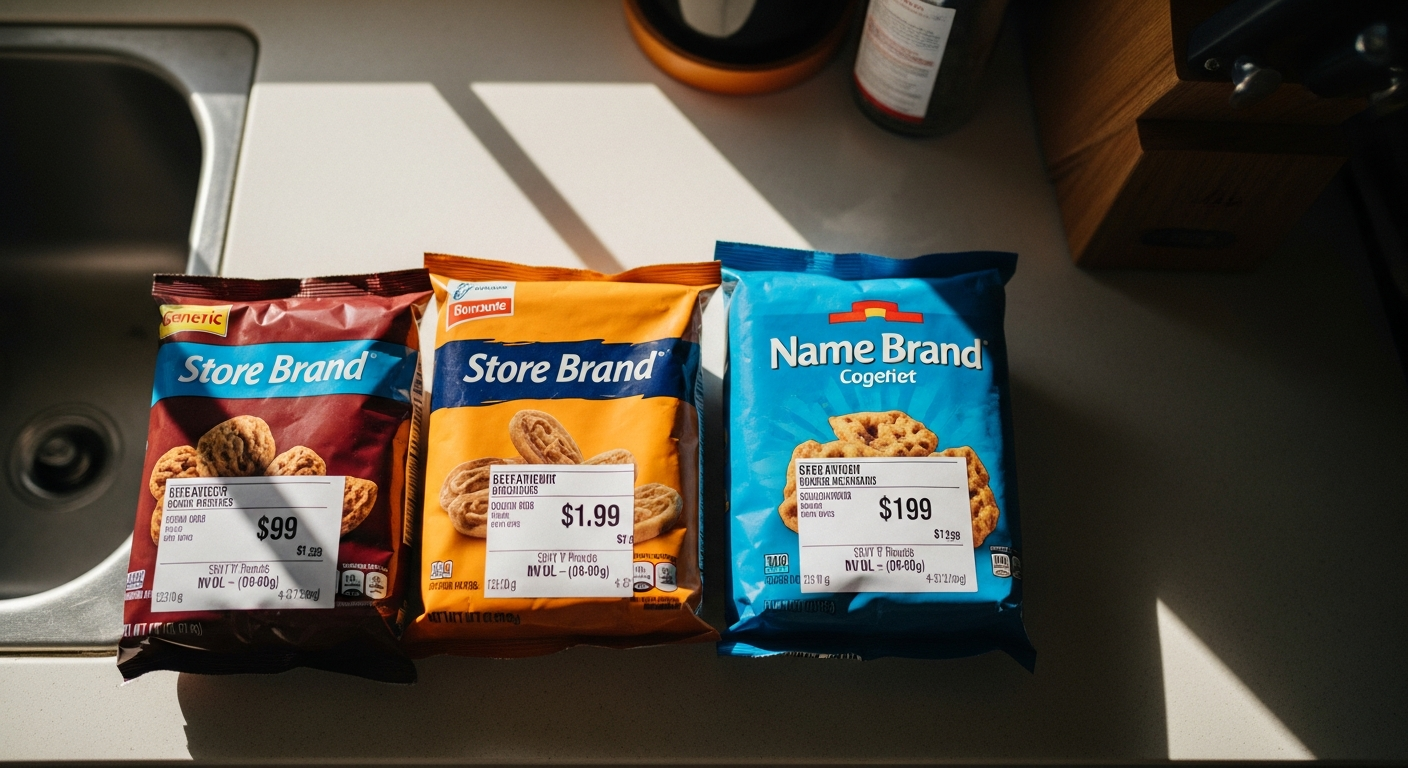
Early last month, I glanced at my shopping cart and nearly fell off my chair—the snack total had hit $80. A bag of shrimp chips was running $4, and those cookies my son loves? Over $5 a box. That’s when the store brand section caught my eye. Same packaging look, but half the price. Too good to be true, right?
So I decided to run a real experiment. For an entire month, I swapped our usual name brands for Amazon’s house-brand snacks—and my family ate every bite. Spoiler: the taste wasn’t always the same, but it wasn’t always worse either.
The first week was brutal. My kid definitely noticed.
When I opened that first store brand snack, my five-year-old’s reaction was instant. “Mom, this isn’t the one I like.” He wasn’t just being picky—he actually remembered the packaging and the flavor. I’ll be honest, that stung a little.
I started with potato chips. Swapped the shrimp chips for the store brand version, and he only ate half the bag. Less salt, less crunch. Not terrible, just… different. But here’s what surprised me: three days later, I caught myself munching on the same bag and thinking, “Actually, this is fine.” Maybe we just needed to adjust.
The cookies were another story. The store brand chocolate chip version was honestly comparable to the name brand. My son demolished both boxes in a day. At 60% of the brand price, that felt like a real win.
Here’s what actually worked: I didn’t swap everything at once. I changed one or two snacks a week—chips on Monday, cookies on Wednesday. That way my son didn’t feel like his whole world had changed overnight. Kids notice that kind of thing, and it makes them anxious. Smart transitions matter.
Frozen Snacks Told the Real Story
That’s where I saw the biggest differences. Mini hot dogs and pizza rolls—these really showed the gap.
The store brand mini hot dogs? Dry. The filling was dense, almost rubbery. Even in the air fryer, they’d crisp on the outside but stay tough inside. My son had one and said, “I’m full, Mom”—which is code for “these taste weird.” He usually asks for seconds.
But the store brand cheese sticks were genuinely excellent. The cheese actually pulls, it’s salty in that perfect snack way, and I’ve definitely eaten more than my fair share of them on Saturday afternoons. That product cost 30% less but came with 20% more in the box. That’s the kind of math I can get behind.
One real tip for frozen snacks: check the sodium content on the label first. Some store brands oversalt to compensate for cheaper ingredients. For kids especially, lower sodium matters. The store brand dumplings I tried actually had reasonable salt levels, so those became a regular dinner-time snack.
Nuts? Store Brand Actually Won This Round.
I didn’t expect this. The store brand mixed nuts became my regular go-to—more so than the name brands I’d been buying.
Same almonds, cashews, and walnuts. Same flavor profile. But the price difference was real: around $12 versus $16 for the same weight. They tasted nutty and fresh. My rule is I don’t skimp on what I’m actually eating, and somehow giving myself permission to switch to the cheaper version felt like a win.
I also tested store brand peanut butter. Lower sugar, still plenty of that roasted flavor. My son spreads it on toast without complaint. It’s not fancy, but it’s honest.
Storage tip: I divide bulk packs into smaller ziplock bags and refrigerate most of it. Pull out just enough for the week, keep the rest sealed. This keeps everything fresh way longer than leaving a huge tub open.
Where I Didn’t Switch: Kids’ Snacks
There’s one category where I stuck with name brands: certified organic and allergen-friendly kids’ snacks.
The store brand kids’ line exists, but when I compared ingredient lists, the additives were either similar or more numerous. And the organic-certified options? There really aren’t great store brand alternatives yet. My son takes snacks to school, so I bought the brands I trusted. I made peace with paying more here because it mattered.
For younger kids especially, I was careful. Artificial dyes, preservatives, common allergens—I read every label. If store brands catch up with organic certification, I’d try them. But for now, this was my holdout category.
광고
The Budget Breakdown
Let me show you the actual numbers, because this is what really matters.
One month of name brands only: about $120 (four-person family, roughly 15 different snacks)
One month mixed with store brands: about $85 (30% savings)
That $35 difference bought us two boxes of the fancy organic fruit chips my son loves. So we saved money and actually upgraded our usual rotation. That’s the sweet spot.
After a month of detailed shopping notes, I noticed a pattern. Minimally processed items—nuts, dried fruit—the store brands held their own. Anything requiring complex manufacturing or special flavoring? The name brands still won. That framework is what I’m using going forward.
| Category | Store Brand vs. Name Brand | Price Difference | Our Pick |
|---|---|---|---|
| Bagged Chips | Similar taste, slightly less crunch | 40% cheaper | Switched to store brand |
| Cookies | Nearly identical | 40% cheaper | Switched to store brand |
| Frozen Snacks | Quality varies by item | 30% cheaper | Pick and choose |
| Nuts | Store brand actually better | 35% cheaper | Switched to store brand |
| Kids’ Snacks | Prefer name brand organic options | — | Stuck with name brands |
My Store Brand Snack Checklist
After a month of trial and error, I’ve got my system down. Follow this and you’ll avoid my early mistakes.
Check the ingredients first: Sodium is the big one. Some store brands oversalt to hide cheaper ingredients. If you’re buying for kids, this matters even more. Compare the label side-by-side with the name brand.
Read the recent reviews: Skip the star ratings. Read the last five to ten reviews instead. “My kids loved this” appearing multiple times is a good sign. If three people mention a weird aftertaste, take it seriously.
Start small: Don’t buy the huge bulk box on your first try. Get the regular size, see if your family actually likes it, then go bulk if it works. Wasting money on a snack nobody eats defeats the purpose.
Check the expiration date when it arrives: Occasionally the delivery includes items getting close to their date. Open the box immediately and verify freshness. I’ve had good luck overall, but it’s worth a quick check.
Look at where it’s made: Same store brand, different source sometimes. Domestic origin often means fresher product, especially for nuts and dried foods. This detail made a real difference for me.
The Definite Wins and the Definite Misses
I’d Buy These Again:
• Store brand mixed nuts — Quality-to-price ratio is genuinely excellent. Fresh and nutty.
• Store brand cheese sticks — Honestly the best frozen option I tested. Real cheese pull, great salty snack.
• Store brand chocolate chip cookies — Couldn’t tell the difference from the name brand. My son ate them without hesitation.
• Store brand peanut butter — Lower sugar, still delicious, perfect for morning toast.
I Won’t Repeat:
• Store brand mini hot dogs — Dry, dense texture. My son rejected them.
• Store brand chips (certain flavors) — The barbecue flavor tasted artificial and off.
• Store brand chocolate bars — Too sweet, weak chocolate flavor.
Everyone’s palate is different. What didn’t work for us might be perfect for your family. These are just my honest observations.
What’s Next: Testing Beverages
This experiment worked better than I expected. My son adapted faster than I thought, and the savings are real. Next month I’m testing store brand juices and drinks. I’ve heard good things about the orange juice, so I’m curious how my son will react.
Here’s what I’ve learned that matters most: store brands aren’t automatically worse. They’re different, sometimes cheaper, sometimes actually better. The key is testing thoughtfully instead of dismissing them outright. Give yourself a month, try things methodically, and you’ll figure out which ones work for your family.
If you’ve had luck with any store brand snacks, drop them in the comments. I’m always looking to expand what we buy.

DCT Family Guide ·
광고
From My Kitchen to Yours · Last updated 2026-06-12
Real-world product reviews and parenting tips from someone who actually tests things.
DCT Family Guide · Laurent’s Mom · Last updated 2026-06-30
Hands-on reviews from a Korean mother of two.
Personal experience-based. Product, policy, and price details may change over time — verify with the source before purchase.
💬 Frequently Asked Questions
❓ How do I get my kids to accept store brand snacks without a meltdown?
Don’t swap everything at once—change one or two items per week so it doesn’t feel like their whole snack routine disappeared overnight. Start with items that taste really similar (like certain cookies or cheese sticks) to build trust, then gradually introduce others. Kids are more likely to adapt when the change feels gradual instead of sudden.
❓ Are store brand snacks actually worse quality or just different?
It really depends on the category. Some items like mixed nuts and cheese sticks are genuinely comparable or even better, while frozen items like mini hot dogs tend to have noticeable texture and flavor differences. The key is trying them yourself first—price doesn’t always predict quality, and some store brands actually use less salt or sugar than name brands.
❓ Which store brand snacks are most worth switching to?
Nuts, cheese sticks, and certain cookies tend to have the smallest quality gap and the biggest price savings. Frozen processed items like mini hot dogs or pizza rolls are where you’ll notice the biggest difference in taste and texture, so those might be worth keeping as name brand if your family really loves them.
❓ Do store brand snacks have different nutritional content than name brands?
Yes, sometimes significantly—especially with sodium levels. Some store brands oversalt to compensate for cheaper ingredients, while others actually have lower sugar or salt than their name brand counterparts. Always check the nutrition label when switching, especially for kids’ snacks where sodium intake matters more.