As an Amazon Associate, we earn from qualifying purchases. Your price is never affected. Full affiliate disclosure.
This post contains affiliate links. As an Amazon Associate, I earn from qualifying purchases. Your price is not affected. Learn more about our affiliate policy
광고
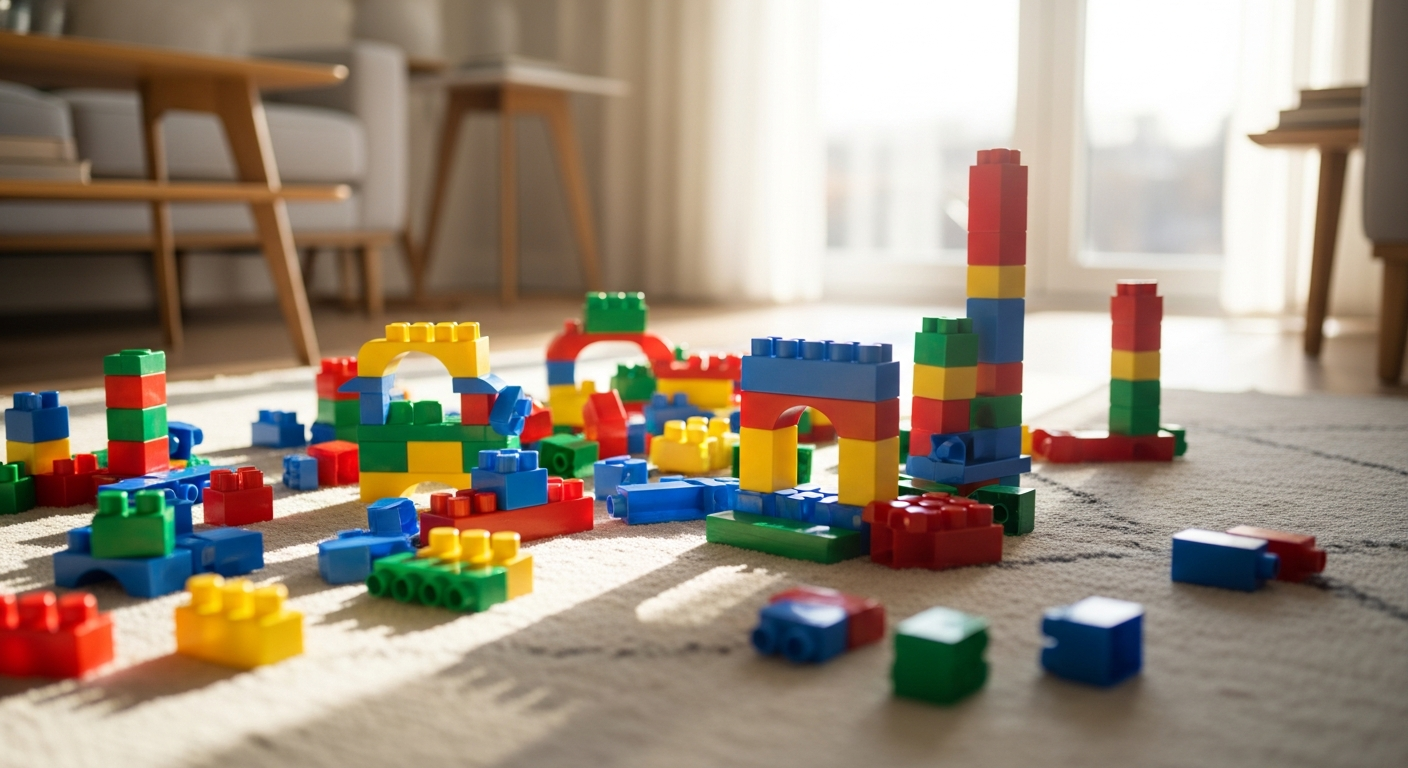
It was a Saturday afternoon in early February when my son Laurent stood in front of our growing toy pile and pointed to one specific box. That day marked the beginning of an experiment I didn’t plan—within weeks, we had LEGO Duplo, Mega Bloks, and Oxford blocks all in our living room. I honestly had no idea there’d be such a huge difference between them.
Laurent is five now, and after preschool, blocks are pretty much his go-to activity. He’d rather build than run around outside lately, which tells me he’s at that stage where he wants to create something. So I started paying close attention: Which set would he reach for? How long would he stay focused? And what was his face like when he finished something?
After three months of watching him rotate through these three brands, the differences in his attention span were honestly striking.
Mega Bloks were the easiest entry point
Mega Bloks is a Canadian brand, and here in the States they’re known mainly for toddler sets. The blocks are chunky—perfect for small hands to grip and snap together. Laurent immediately loved making cars with them. The colors are bright and cheerful, so they definitely catch a kid’s eye. And you only need three or four blocks to feel like you’ve “finished” something, which gives that quick dopamine hit of accomplishment.
But here’s what happened: about a week in, he got bored. (Honestly, I got a little bored watching him make the same shapes over and over.) The focus time averaged about 10 minutes max. He’d build something, announce he was done, and move on to a different toy without looking back. For a five-year-old who’s starting to want more complex play, the simplicity works against it.
Oxford had a real story built in
Oxford is a Korean brand that’s gained traction internationally for themed sets—everything from firefighter stations to architectural landmarks. We grabbed their Fire Station set, which came with a fire truck and little firefighter figures. Laurent took one look and asked to build it right then.
The difficulty level felt just right—a middle ground. He needed my help to follow the instructions, but he could actually snap the blocks together on his own. The quality surprised me. I’d heard Oxford stepped up their game, and holding them next to the LEGO pieces, I could see it.
What was really cool was watching him play after building. He grabbed that little fire truck and turned the whole thing into a pretend scenario: “There’s a fire! The firefighter is coming!” The assembly took 15-20 minutes, then he’d spend another 10-15 minutes in imaginative play. The clear theme gave him a natural story to work with.
One small frustration: the blocks felt stiff going together. Laurent would sometimes say, “Mom, this one won’t go,” and I’d have to help him snap it in. Even I noticed it took noticeably more force than the LEGO pieces. For a five-year-old’s grip strength, that was occasionally frustrating.

LEGO Duplo was the game changer
LEGO Duplo is their toddler line. The blocks are twice the size of standard LEGO, designed to be impossible to swallow. At five, Laurent could handle regular LEGO, but we started with the Duplo Zoo set anyway to be safe.
The first week, we built together following the instructions. Then around day 8 or 9, something shifted. He opened the box on his own, started experimenting with pieces, asking questions like, “Does this fit here?” but not waiting for my answer—just trying it. By week two, he’d sit down after breakfast and focus for 30 minutes straight. And by the third week, he’d stopped following the instructions entirely. He was improvising, mixing and matching, building what he wanted to build.
I remember the morning he called me over to show me his creation: “Mom, I made a giraffe house!” And you know what? It actually looked like a giraffe house. It was charming and weird and totally his.
The difference in how the blocks felt was noticeable. Snapping them together and pulling them apart felt smooth—effortless. Laurent’s hands never got tired or frustrated with them. His average focus time jumped to 40 minutes or more. Think about that: Mega Bloks had him for 10 minutes, Oxford for about 20, LEGO for 40. That’s a huge gap.
By mid-March, Laurent started asking me, “Can we get more LEGO?” He’d never asked that about the other sets. Not once.

광고
Let’s talk about the money
The price gap was real. For roughly the same number of pieces, Mega Bloks ran about $20, Oxford around $30, and LEGO Duplo hit $50-60. That’s two to three times the cost, and honestly, when you’re a parent watching your budget, that stings.
But here’s what changed my mind: I was watching Laurent play with the same LEGO set for three months straight, asking for more, building new things every few days. The other sets? They collected dust after a couple of weeks. So while LEGO costs more upfront, the cost-per-hour of use actually works out in its favor.
Oxford definitely deserves credit for being the budget-friendly sweet spot. If you have a four or five-year-old who loves pretend play and themed stories, buying a couple of Oxford sets is a smart move. And Mega Bloks? Honestly, that’s your set for younger siblings—the two or three-year-old crowd where durability and safety matter most.
| Feature | Mega Bloks | Oxford | LEGO Duplo |
|---|---|---|---|
| Typical Price | Around $20 | Around $30 | $50–60 |
| Block Size | Large (toddler) | Medium | Large (toddler) |
| Assembly Difficulty | Very easy | Medium | Easy to medium |
| Focus Time (5-year-old) | ~10 minutes | 15–20 minutes | 40+ minutes |
| Snap-Together Feel | Smooth | Stiff | Smooth |
| Creative Building | Limited | Theme-based | Open-ended |
| Best For | First blocks (age 2–3) | Themed play (age 4–5) | Creative builders (age 4–7) |
The thing he said at bedtime
Fast forward to early May. It was a school night, and I was tucking Laurent in. Out of nowhere, he said, “Mom, tomorrow when I get home from preschool, I’m gonna make a big house with my LEGO. A really big one.”
He was thinking about LEGO before he fell asleep. Not thinking about the Mega Bloks or the Oxford blocks—he was already planning his next LEGO project.
That one comment told me everything I needed to know about why focus time matters. It’s not just about how long they can sit still. It’s about whether they come back to it, whether they think about it, whether they want more. LEGO did that for Laurent in a way the others didn’t.
If you’re weighing these three options, I won’t pretend price doesn’t matter—it does. But I also won’t pretend the difference in engagement is small. For a five-year-old ready to actually build and create, LEGO’s premium price came with a premium amount of focus time, curiosity, and genuine creative play. And honestly? That’s worth more than I expected.

DCT Family Guide · Laurent’s Mom · Last updated 2026-06-29
Hands-on reviews from a Korean mother of two.
Personal experience-based. Product, policy, and price details may change over time — verify with the source before purchase.
💬 Frequently Asked Questions
❓ Are LEGO Duplo and regular LEGO bricks compatible with each other?
Yes, Duplo bricks are designed to connect with standard LEGO bricks, which means your child can transition smoothly as they grow. The Duplo studs fit into regular LEGO, so sets can be combined once your 5-year-old is ready for smaller pieces around age 6 or 7.
❓ Can you mix Mega Bloks with LEGO Duplo blocks?
They’re similar in size and sometimes fit together loosely, but they’re not officially compatible and the connection isn’t always secure. If your child tries to combine them, some pieces will snap together while others won’t hold well, which can be frustrating during play.
❓ How long do building blocks typically hold a 5-year-old’s attention?
It varies widely by brand and complexity—simple blocks might get 10-15 minutes, while themed sets with instructions and characters can hold focus for 30-45 minutes or longer. At age five, kids usually need some kind of story or goal built into the play to stay engaged beyond basic stacking.
❓ Are Oxford blocks available in the US or only overseas?
Oxford blocks are a Korean brand but they’re increasingly available through Amazon and specialty toy retailers in the US. Selection can be more limited than LEGO or Mega Bloks, and shipping times may be longer if ordering directly from international sellers.