This post contains affiliate links. As an Amazon Associate, I earn from qualifying purchases. Your price is not affected. See our disclosure policy
광고
The Quick Version
- We tested both structured workbooks and everyday exposure with our 5-year-old over three months
- The workbook was organized, but our son rejected it within a week. Zero fun.
- Natural exposure was slower, yet he stayed curious and genuinely enjoyed learning
- Every child development expert we researched said the same thing: wait until they show interest, not before
- Our conclusion: starting Korean reading before first grade is completely fine. No rush needed.
It happened on a random Tuesday in March when our son came home from preschool and said, “Mom, I want to learn to read like my friend does.” He’d watched a classmate write out her name that day. That’s when our three-month experiment began.
Should we buy a workbook or let him pick it up naturally through everyday life? It’s the question every parent of a 5-year-old wrestles with. I definitely did—sitting in the preschool parking lot listening to other moms talk about their kids already reading, I felt that familiar twinge of parental anxiety.
Is 5 Really the Right Age?
I read several parenting books, and they all said the same thing: kids should be at least four years old before starting formal reading instruction. Our son is turning five soon, so technically he qualifies. But age alone doesn’t mean readiness.
Every expert I found emphasized the same point: the “right time” isn’t about age—it’s about whether your child is actually ready. Every child develops differently. Some pick it up fast, others need more time. And how they respond to written words varies wildly from child to child.

Month One: The Workbook Approach
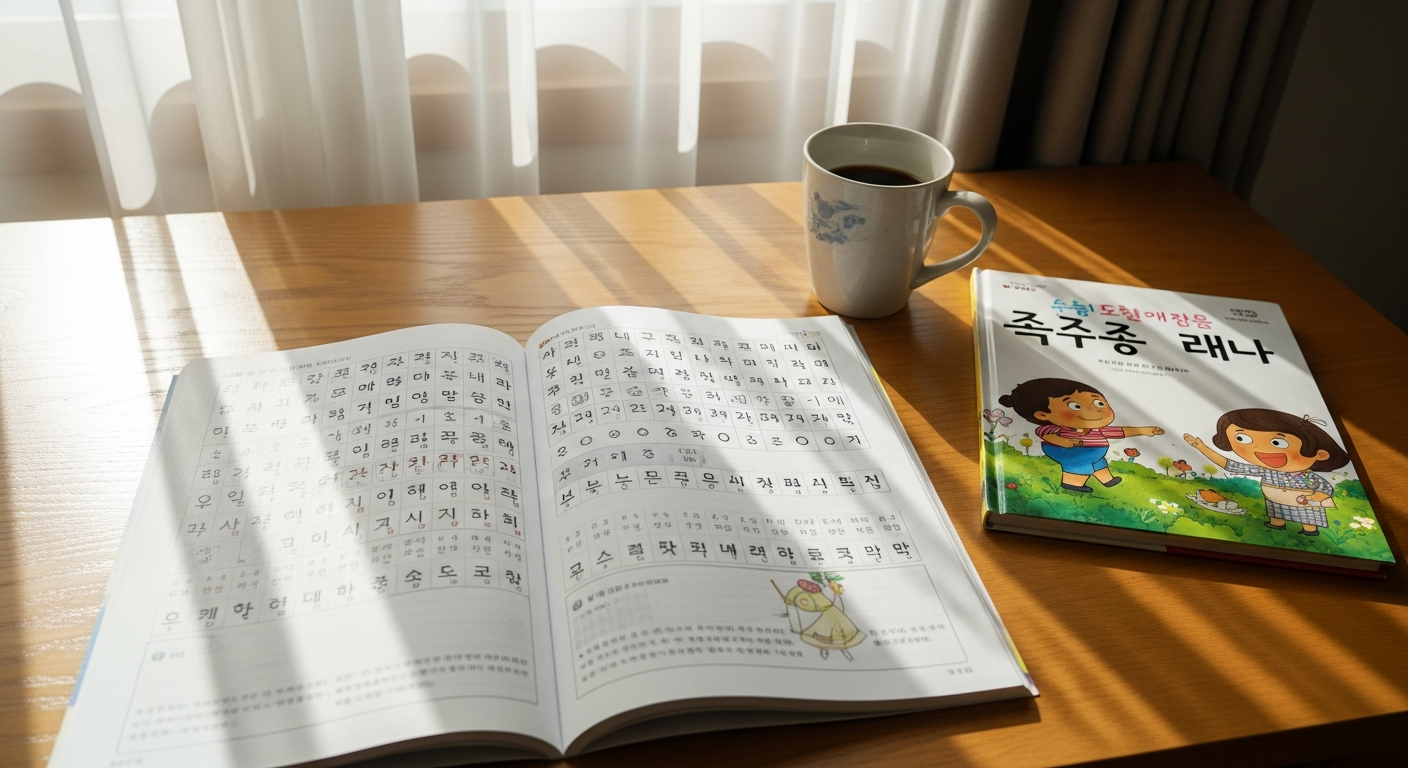
The second week of March, we headed to our local bookstore because he asked. The children’s section was packed with workbooks covered in cartoon characters. He picked one with his favorite character on the cover—cost around $9.
The first four days were exciting. Two pages a night, 15 minutes after finishing his preschool homework, right before dinner. We started with basic consonants. But here’s what I didn’t expect: holding a pencil properly and writing letters at age five is hard. His fine motor skills just weren’t there yet.
By day eight, the resistance started. “I don’t want to do it today, Mom.” When I pushed a little (thinking consistency matters), he’d get frustrated and irritable. The workbook stopped feeling like fun and started feeling like a chore. I found out later that some experts actually compare teaching Korean letters to a five-year-old with a structured curriculum to putting too much pressure on a still-developing brain—kind of harsh, but it clicked for me.
One month in: He could recognize the consonants we’d covered. But we’d also created a pretty clear aversion to “Korean lesson time.” That’s when I stopped. “I don’t like learning Korean” isn’t the message I wanted him walking away with.
Months Two and Three: Letting It Happen Naturally
In April, we flipped the script completely. Instead of structured lessons, I focused on what the experts suggested: surrounding him with Korean letters in his everyday life and letting curiosity do the driving.
Here’s what we actually did:
- Read picture books out loud regularly, then pause to spot letters he already knows
- Point out and read store signs, restaurant names, and building signs when we’re out
- Write family members’ names in big letters and tape them around the house
- Stick magnetic letter cards on the fridge and read one during breakfast
- Play Korean alphabet songs from YouTube while he plays
Something shifted. He started asking *us* the questions instead. “What does that say?” he’d call out from the car looking at a billboard. “Mom, what’s that word?” standing in front of a store. “Is that how you spell my name?” reading a poster at an amusement park.
Two months later: He could read his own name, our names, and the titles of shows he loves. Nothing close to fluent, but way more importantly—his attitude had completely flipped. “Learning Korean is fun,” he’d say. That meant everything to us.

Workbooks vs. Natural Learning: What We Found
| Factor | Workbook | Natural Exposure |
|---|---|---|
| Learning Speed | Fast (14 consonants in one month) | Slow (10 words over two months) |
| Kid’s Attitude | Resistance by week two | Curiosity and enthusiasm throughout |
| Parent Time Commitment | 15 minutes daily, set schedule | 5–10 minutes spread throughout the day |
| Cost | Around $9 per workbook | Around $6 for magnetic cards |
| Long-Term Impact | Structured but created pressure | Slower but built self-directed learning |
Honestly, both have real pros and cons. The thing experts keep saying is this: what matters most is whether your child is actually interested. And even kids the same age develop physically at completely different rates, so you really need to watch *your* kid and what works for *them*.
광고
How to Tell If Your Child Is Ready
The real “right time” is when your child starts showing genuine interest in reading. If most of these ring true, you’re probably looking at your window:
- Your child asks questions about letters or words without you bringing it up
- They point at signs and ask what they say
- They notice when their name appears somewhere
- They’re able to sit and focus on a picture book for at least 10 minutes
- They show frustration with not understanding something, but it doesn’t turn into a meltdown
- You’re not the one pushing—they are
What We’re Doing Now
Six months in, we’ve kept things low-key. No formal lessons. We still read together every night, we still read signs when we’re out, and the magnetic cards stay on the fridge. Some weeks he’s obsessed with spotting letters everywhere. Other weeks he barely notices. That’s fine.
What I wish I’d known earlier: there’s genuinely no rush. Kids start first grade eventually, and teachers know how to teach reading. If your five-year-old isn’t reading yet, they’re not behind. If they’re reading fluently, that’s great too. Both are totally normal.
The goal for us isn’t early literacy—it’s raising a kid who thinks learning is something fun to do together, not something mom makes him sit down and do. That three-month experiment taught us that the slower path might actually be the smarter one.
Books and Resources That Actually Helped
- Magnetic letter cards – Kids love them, less pressure than workbooks
- Age-appropriate picture books – The foundation of natural exposure
- Alphabet songs – Let YouTube do the work while they play
- Your family’s names in big letters – Surprisingly motivating for kids

DCT Family Guide · Laurent’s Mom · Last updated 2026-06-25
Hands-on reviews from a Korean mother of two.
Personal experience-based. Product, policy, and price details may change over time — verify with the source before purchase.
💬 Frequently Asked Questions
❓ What age do most experts recommend starting formal Korean reading instruction?
Most parenting experts say kids should be at least four years old before starting formal reading instruction, but many child psychologists actually suggest waiting until six or seven when their brains can handle the cognitive load more easily. The key isn’t hitting a specific age—it’s watching for signs your child is actually interested and ready.
❓ How long did it take before the workbook approach stopped working?
The workbook lost its appeal around day eight, which was just over a week into the experiment. The author’s son started resisting the lessons, saying he didn’t want to do them, and the 15-minute sessions shifted from feeling fun to feeling like a chore.
❓ Why did the structured workbook fail for a 5-year-old?
The main issue was that fine motor skills weren’t developed enough yet—holding a pencil properly and writing Korean letters was genuinely difficult at that age. Combined with the pressure of daily structured lessons, it created frustration instead of curiosity, and the child started saying he didn’t like learning Korean.
❓ Is it too late to teach Korean reading if I wait until first grade?
No, waiting until first grade is completely fine according to the author’s research and conclusion. There’s no educational rush, and starting when your child shows genuine interest tends to lead to better long-term results than forcing it early.