As an Amazon Associate, we earn from qualifying purchases. Your price is never affected. Full affiliate disclosure.
This post contains affiliate links. As an Amazon Associate, I earn from qualifying purchases. Your price is not affected. Learn more about our disclosure policy.
Last April, my daughter Lauren asked me: “Mom, can we sleep outside?” That one question kicked off our camping adventure. The problem? I had no idea which tent to buy. I spent hours scrolling through options—instant pop-ups, air tents, bell tents, domes—and they all looked kind of the same to me at first.
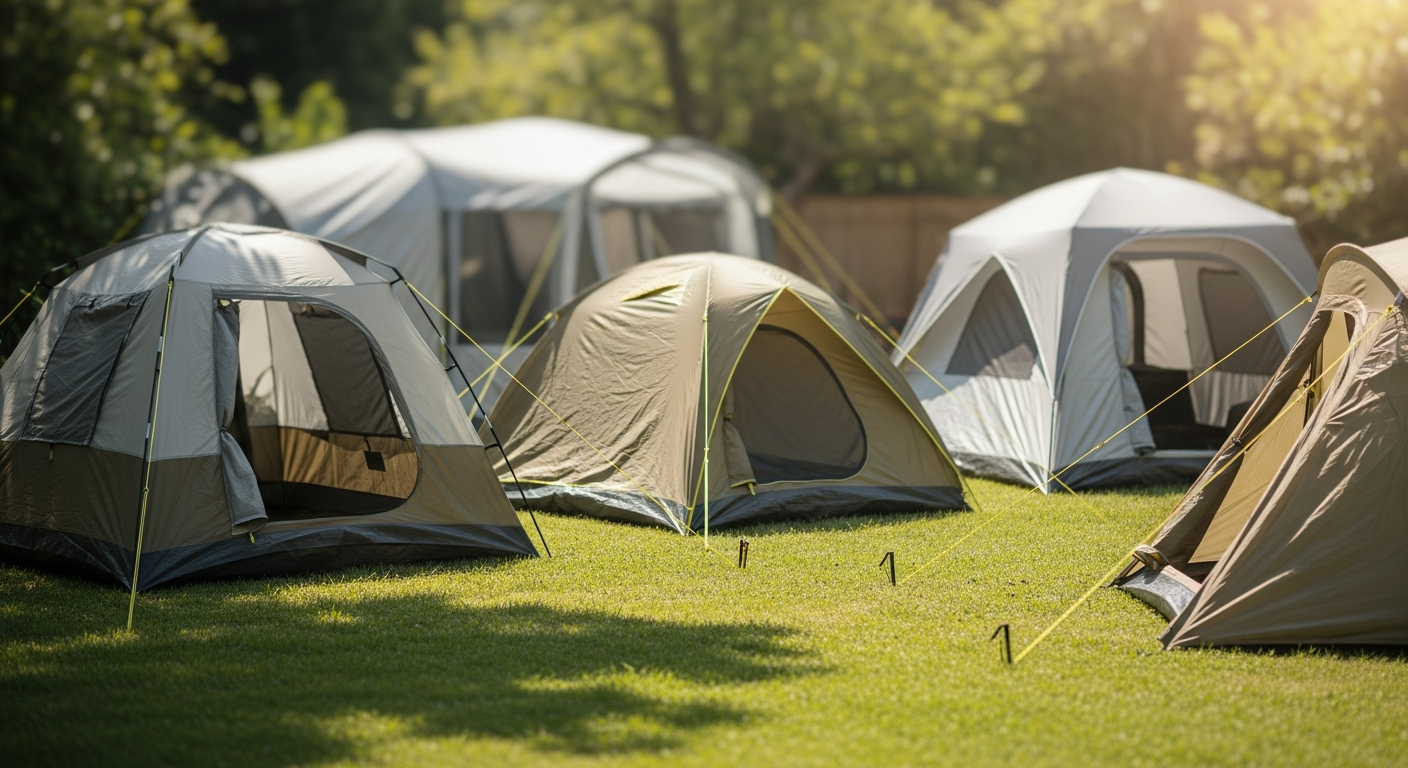
So I did what any overthinking parent would do: I borrowed or rented five different tent styles and tested them myself. I timed the setup, watched how Lauren reacted, and even put them through a rainstorm. This is what I learned about which tent actually works for us.
Instant Pop-Up Tent — Set It Up in 10 Minutes and Play
For our first camping trip, I went with an instant tent. You flip open these brackets and the whole frame snaps up—it’s honestly a little magical. The SwissMountain Hexagon Instant Tent has over 4,500 reviews with a 4.5-star rating. I can see why.
We had the whole thing up in 10 minutes flat. While my husband and I were securing the rain fly, Lauren was already running around the grass. Dome tents are supposed to be beginner-friendly, but instant tents? They’re even easier.
Here’s the catch: in heavy rain, water seeps through. Light drizzle? You’re fine. A proper downpour? You’ll need a backup plan or a tarp overhead. It’s not waterproof—more like water-resistant. But for spring and fall camping when the forecast looks clear, it’s perfect. If you’re planning your first camping trip, having a camping prep checklist really helps take the stress out.
Air Tent — Pump It Up and Go, But It’s Heavy
On our second trip, we rented an air tent. Instead of connecting poles, you use an electric pump to inflate the tube beams. Two people can have the frame up in about 10 minutes—no fumbling with pole segments.
The inside space was genuinely spacious. A 5-8 person tent gave our whole family room to stretch out. I could stand up almost fully, and Lauren had room to move around without bumping into the walls. That’s a huge difference from some tents where you’re basically lying down.
But the weight was real. The packed bag was bulky, and it took up a serious chunk of our car’s cargo space. If you’re already loading up gear, snacks, and toys, this tent might squeeze you out of trunk room. Something to think about if you’re packing light.
Bell Tent — Gorgeous Space, Tough to Assemble for Beginners
I saw a beautiful bell tent at a local camping café and got major tent envy. The marketing promised an open, airy living space and easy setup. And it’s true—the interior is amazing. There’s room for a table, chairs, and sleeping bags with space left over.
But the assembly? That was a different story. You’ve got three or four poles that slot into specific spots in a particular order. On our first try, my husband and I spent 40 minutes reading the instructions, adjusting angles, and generally being confused. Lauren kept asking, “Mom, are we done yet?” in that way kids do when they’re losing patience.
Bell tents also aren’t allowed on deck platforms at some campgrounds because of their footprint and weight distribution. If you’ve camped a few times before and have the space for it, go for it. But as a first tent? I’d wait until you’ve got some experience under your belt.
Dome Tent — The Reliable Workhorse
Dome tents get recommended to beginners for good reason. The structure is simple: two poles cross each other and lock into the corners. You can literally set one up without reading the manual.
On windy days, the design really held its own. Once you secure the stakes properly, there’s no flex or wobble—even when Lauren jumped around inside, the tent stayed solid. The aerodynamic shape just sheds wind naturally.
The trade-off is headroom. You’re mostly sitting or lying down. Changing clothes while kneeling isn’t anyone’s idea of fun. For a quick overnight trip or staying on a deck site where a larger tent won’t fit, dome tents are genuinely your best bet. Check out our guide to family-friendly camping sites if you’re looking for places that welcome tent camping.
Pop-Up Shade Tent — Perfect for Beach Days, Not for Sleeping
These are the small, lightweight pop-up tents—the ones that literally spring open from their bag with a satisfying snap. The style I tested was about 8 feet by 7 feet with mesh panels on all sides for airflow. It fits 2-3 people comfortably as a shade shelter.
We took it to a local park for a picnic one afternoon. Setup took all of three seconds. Lauren thought it was magic. “Mom, did you do a spell?” The whole thing weighs less than 3 pounds, so I could carry it with one hand.
Where it falls short: wind. Without stakes properly driven deep at 45-degree angles, a gust can send the whole thing flying. These are genuinely designed for daytime shade at the beach or park—not for overnight camping. Think of it as a sun protection tool, not a sleeping shelter.
What We Actually Chose
After testing all five, the answer became obvious. For a 5-year-old and first-time parents, setup speed and weight matter most. We went with the instant tent and added a separate tarp to extend over it for rainy weather. That way we get the 10-minute setup with the rain coverage we need.
If you’re stuck deciding, ask yourself these three questions: “How often will we actually camp?” “Do we have room in the car for everything else we’re bringing?” “How much waiting around will my kid tolerate while I’m setting up?” Once you answer those honestly, the right tent choice usually becomes clear.
We’ve booked another camping trip for next weekend. This time I’m planning 10 minutes for tent setup and two full hours of playtime. That’s the schedule that actually works for us.
| Type | Setup Time | Capacity | Best For | Watch Out For |
|---|---|---|---|---|
| Instant Pop-Up | 10 min | 4–6 people | First camping trip, good weather | Water seeps in heavy rain; add a tarp |
| Air Tent | 10–15 min | 5–8 people | Need spacious interior, longer trips | Heavy, takes up cargo space |
| Bell Tent | 40 min | 6–8 people | Experienced campers, large sites | Complex setup, not allowed on deck platforms |
| Dome Tent | 15 min | 2–3 people | Quick getaways, tight spaces, windy weather | Low ceiling, limited standing room |
| Pop-Up Shade Tent | 3 sec | 2–3 people | Beach days, park picnics, daytime shade | Weak in wind, not for sleeping outdoors |

DCT Family Guide · Laurent’s Mom · Last updated 2026-06-17
Hands-on reviews from a Korean mother of two.
Personal experience-based. Product, policy, and price details may change over time — verify with the source before purchase.
💬 Frequently Asked Questions
❓ How long does it actually take to set up an instant tent with a young kid helping?
The SwissMountain Hexagon Instant Tent went up in about 10 minutes with just two adults, even while our 5-year-old was running around. If your kid wants to ‘help,’ expect it to take a bit longer, but the snap-up frame design is so simple that there’s not much they can mess up.
❓ Are instant tents actually waterproof or will I wake up soaked?
Most instant tents are water-resistant, not fully waterproof—light rain is fine, but heavy downpours can seep through. If there’s a chance of serious rain, bring a tarp to set up overhead or choose a tent with better waterproof ratings and sealed seams.
❓ What’s the difference between an air tent and an instant tent?
Instant tents use a frame that snaps into place in minutes, while air tents use inflatable beams you pump up with an electric or manual pump. Air tents tend to be heavier and bulkier, but they can handle wind better since there are no poles to bend or snap.
❓ Which tent is easiest for a first-time camper with a preschooler?
An instant pop-up or dome tent is your best bet for a first trip—they’re fast to set up and don’t require much experience. Avoid air tents or bell tents for your first outing unless you’re okay with a learning curve and extra setup time.