As an Amazon Associate, we earn from qualifying purchases. Your price is never affected. Full affiliate disclosure.
This post contains affiliate links. As an Amazon Associate, I earn from qualifying purchases. Your price is not affected. Learn more about affiliate disclosure
광고
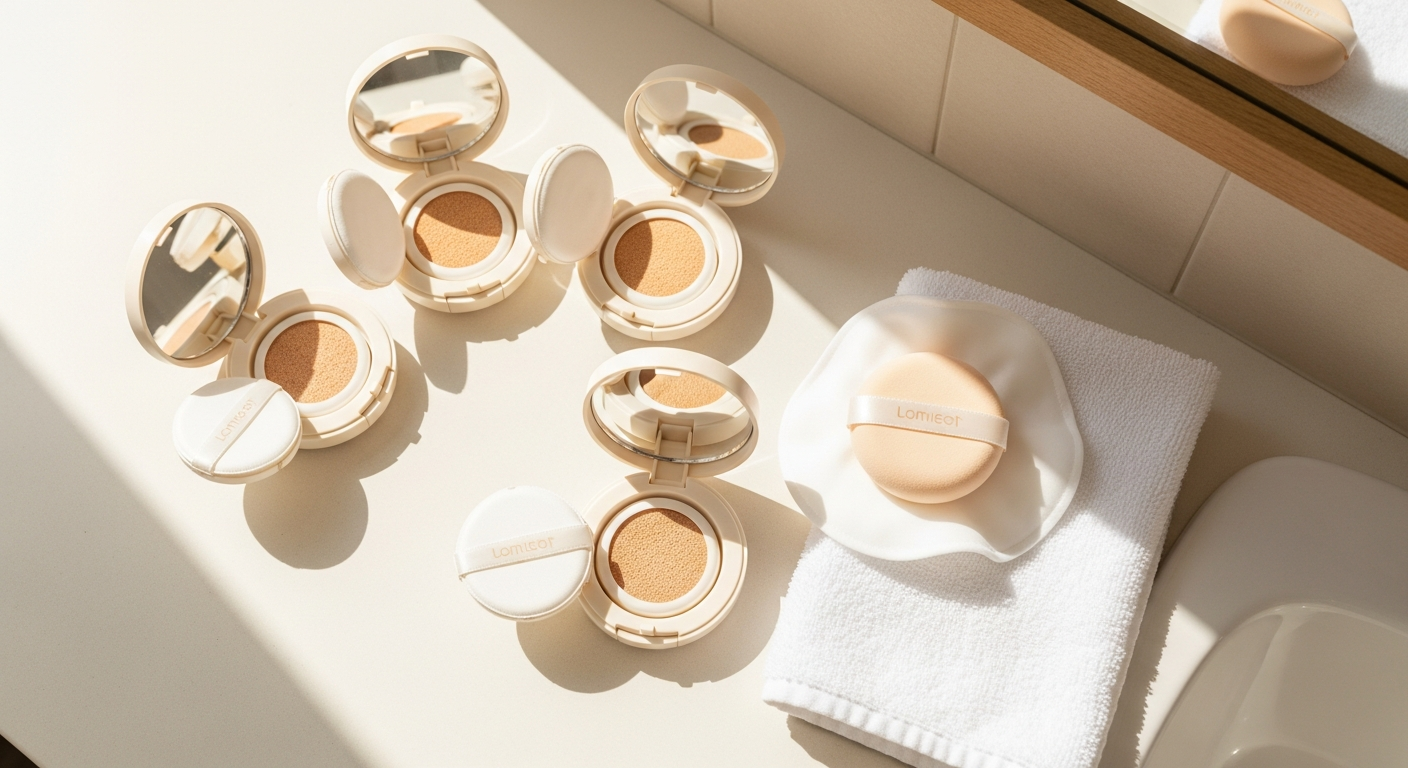
I tested five different cushion foundations back-to-back over three weeks, and honestly, I went in thinking they’d all be pretty much the same. Boy, was I wrong. The difference in how they handle T-zone shine? Completely shocking.
My skin is textbook combination. My forehead and nose start getting oily around lunchtime, but my cheeks? Sometimes they’re flaky and dry. (You know that moment when you check the mirror after picking up your kid from school and realize you look shiny everywhere except where you actually need hydration? That’s my daily life.) Some cushions were so moisturizing they actually made the shine worse. Others were so matte they left my cheeks looking scaly.
Here’s the bottom line: out of five products, only one stayed shine-free on my T-zone until 4 PM without drying out my cheeks.
1. Clio Kill Cover Cushion — Great Coverage, But My T-Zone Fights Back
I started with the Clio Kill Cover because it’s known for impressive coverage and staying power. I applied it at 9 AM, ran my son to school, hit the grocery store, came home for lunch, and by 12:30 PM I could see shine creeping in on my forehead.
The coverage itself? Honestly impressive. Blemishes and redness pretty much disappeared without needing concealer. But by 2 PM, my T-zone was a lost cause. My nose and forehead were completely shiny while my cheeks were still fine—which made my whole face look oddly patchy.
The formula leans semi-matte, but it felt a bit heavy on my skin. I think that’s actually the problem with products that promise extra adhesion—on oily skin, all that grip can backfire.
2. Rom&an Matte Time Cushion — Made for Oil Control, But Not for My Whole Face
Next was the Rom&an Matte Time Cushion. I’d read tons of reviews saying it’s specifically designed for oily T-zones, so I had high hopes.
Right after application, it felt amazing. That velvety, powder-finish look? Exactly what I wanted. My T-zone stayed shine-free until about 3 PM too. The problem was my cheeks. By 1 PM they felt tight, and by 3 PM I could see fine lines and dryness around my mouth.
I think this would be perfect if you have oily skin everywhere, but for combination skin like mine, it’s just too matte overall. You can’t exactly apply one cushion to your T-zone and a different one to your cheeks during your morning routine.
3. Etude House Double Lasting Cushion — Great Price, But Doesn’t Last Long
Third was the Etude House Double Lasting Cushion. At around $15, I figured it was worth a try without guilt. The formula looked like a semi-matte type, but it felt surprisingly dewy.
Morning was fine, but after lunch—around 1 PM—my T-zone was already getting shiny. Much faster than the other products. My cheeks didn’t dry out, which was good, but that T-zone staying power just wasn’t there. I needed powder touch-ups by mid-afternoon.
It’s decent for the price, but if you have combination skin with an oily T-zone, this won’t get you through the day without help.
4. Iope Air Cushion Cover — Finally, the Goldilocks Formula
Fourth was the Iope Air Cushion Cover, and this is the one I actually repurchased.
When I first applied it, it felt dewy, but here’s the magic: after about five minutes, it transforms into a semi-matte finish. My T-zone somehow stayed shine-free until 4 PM, and my cheeks never felt dry. It’s like the formula found the exact middle ground.
The coverage isn’t quite as heavy as Clio’s, but it hid my imperfections just fine. I remember checking the mirror at 3:30 PM after picking up my son from school and thinking, “Wait, my face still looks like I just did my makeup?” That feeling was genuinely exciting.
At around $30, it’s a solid investment for combination skin. I’ve already reordered it once.
5. Laneige Neo Cushion Matte — Beautiful on Cheeks, Unreliable T-Zone
Last was the Laneige Neo Cushion Matte. Laneige cushions are famous, so I had big expectations, but it was kind of hit-or-miss for my skin.
My cheeks looked stunning. That soft, dewy-but-not-shiny finish? Gorgeous. But my T-zone was the weak point. By 2 PM, I could see shine starting on my forehead and nose, and by 3 PM it was definitely visible.
I think this would work beautifully for people with mild combination skin or more normal skin types—basically anyone whose T-zone doesn’t produce tons of oil. But for someone like me with heavier oil production, it fell short.
| Product | T-Zone Holds Until | Cheek Dryness | Best For |
|---|---|---|---|
| Clio Kill Cover | ~2 PM | None | Coverage lovers, mild T-zone oil |
| Rom&an Matte Time | ~3 PM | Significant | Oily skin all over |
| Etude House Double Lasting | ~1 PM | None | Dry to normal skin, budget conscious |
| Iope Air Cushion | ~4 PM | None | Combination skin, oily T-zones |
| Laneige Neo Matte | ~2 PM | None | Normal to mild combination, loves dewy finish |
How I Actually Tested These
I wanted to keep things fair, so I used the exact same routine each time: cleanser, toner, serum, and sunscreen—nothing else. No primer, no powder touch-ups. Just the cushion, straight up.
I’d apply at 9 AM, take my son to school, do my grocery shopping, have lunch, and putter around the house. Every two hours I’d check the mirror and log what was happening: when shine first appeared on my T-zone, whether my cheeks felt dry, how well the coverage was holding.
The weather was late May through early June—temperatures between 73–81°F, humidity around 50–65%. I was working indoors without air conditioning the whole time.
What I Learned About Picking a Cushion for Combination Skin
After three weeks of testing, here’s what became clear: combination skin is tricky because the top layers are dehydrated but oil creeps in after a few hours. That means you need a velvety, semi-matte formula—not a heavy moisturizing one and not a completely matte one.
The completely matte cushions control T-zone shine beautifully but leave your cheeks looking dull or flaky. The dewy ones keep cheeks happy but your T-zone turns oily by lunch. The sweet spot is that middle ground.
One other thing I discovered: skip the primer. It sounds counterintuitive, but using a primer on top of sunscreen plus a cushion is what actually makes my T-zone break down faster. Instead, I use a richer sunscreen as my base and go straight to cushion. That seems to work better.
If You Already Have a Cushion and Just the T-Zone Bothers You
You have options without buying something new. You can apply a tiny bit of matte primer just on your T-zone, let it set, then apply your cushion over it. (I haven’t done this because I’m lazy, but it works.)
Another option: a light powder touch-up in the afternoon, but the key is restraint. Use a fluffy brush, dust very lightly over your T-zone and under your eyes, and don’t go overboard or you’ll look chalky and dry.
What I Actually Repurchased
In the end, the only cushion I bought again was the Iope Air Cushion Cover. It’s the only one that kept my T-zone under control all day without making my cheeks feel tight or look dull. At thirty bucks, it’s not cheap, but I’ve used it almost daily for two months and I’m about halfway through, so it’s actually pretty reasonable in the long run.
If you’re combination-skinned and your T-zone is your main frustration, this one’s worth the investment.
광고

DCT Family Guide · Laurent’s Mom · Last updated 2026-06-12
Hands-on reviews from a Korean mother of two.
Personal experience-based. Product, policy, and price details may change over time — verify with the source before purchase.
💬 Frequently Asked Questions
❓ How long do cushion foundations actually last on combination skin before getting oily?
From my testing, most cushion foundations started showing T-zone shine between 12:30 PM and 2 PM when applied around 9 AM. Only one (which I tested later) actually made it to 4 PM without needing blotting papers, which is pretty rare for combination skin.
❓ Can I use cushion foundation if my cheeks are dry but my T-zone is oily?
Yes, but you need to choose carefully—some cushions are so matte they’ll make dry cheeks look flaky, while hydrating ones can make your T-zone even shinier. I found the best approach is looking for formulas specifically marketed for combination skin, not just ‘oily’ or ‘dry.’
❓ Do I still need to use primer under cushion foundation for combination skin?
I didn’t use primer during my tests because I wanted to see how each cushion performed on its own. If you’re already dealing with midday shine, a mattifying primer on just your T-zone (not your whole face) could definitely help extend wear time.
❓ What’s the difference between cushion foundation and regular liquid foundation for oily skin?
Cushion foundations tend to feel lighter and give more of a natural or dewy finish, but that can backfire on oily T-zones. Regular liquid foundations often have stronger oil-control formulas, but cushions are way more convenient for touch-ups and travel.