As an Amazon Associate, we earn from qualifying purchases. Your price is never affected. Full affiliate disclosure.
Thank you for reading this post, don’t forget to subscribe!광고
This post contains affiliate links. As an Amazon Associate, I earn from qualifying purchases. Your price is not affected. Affiliate & Advertising Disclosure
💡 Quick Answer
Babies show seven key readiness signs before walking, including standing independently, cruising along furniture, and balancing. Most children walk between 9-18 months.
Advertisement
⚡ TL;DR
- • Most babies start walking between 9-18 months, with the CDC’s latest guidelines extending the typical range to 18 months
- • Readiness signs include pulling to stand, cruising along furniture, scooting, standing independently, and showing the motivation to move
- • The American Academy of Pediatrics recommends developmental screenings at 9, 18, and 30 months
- • Baby walkers don’t help—research shows they may actually delay walking
- • Barefoot practice is most effective for brain stimulation and balance development
광고
“My Baby Still Isn’t Walking” — Every Parent’s Worry
“The neighbor’s kid was walking before his first birthday, but my daughter is 16 months and still cruising along the couch. Should I be worried?”
If you’ve had this thought, you’re definitely not alone. Those first steps are such a milestone—for baby and for us. But figuring out when they’ll happen and how we can help? That can feel really overwhelming.
Today, I want to walk through the latest medical guidance on baby walking readiness and share practical ways we can actually support our little ones during this stage.
How the Walking Milestones Have Changed
In 2022, the American Academy of Pediatrics (AAP) and the CDC made their first major revision to developmental milestones in 20 years. The biggest change? The walking milestone shifted from 12 months to 18 months.
The old guidelines were based on what 50% of babies could do. The new ones reflect what 75% or more can do—giving more kids the time they actually need.
What the New Milestones Mean
- • 15 months: Takes a few steps
- • 18 months: Walks steadily
- • If not walking by 18 months, professional consultation is recommended
One pediatric expert explained it beautifully: “These changes can really ease parents’ minds. My youngest didn’t walk until 15 months—her big sister brought her everything, so she didn’t need to! I was on the verge of requesting physical therapy at 12 months. If I’d known 15 months was more realistic, I would’ve worried a lot less.”
7 Signs Your Baby Is Ready to Walk
1. Pulling to Stand (8-10 months)
Grabbing onto furniture or your hands to stand up is the first step toward walking. This usually shows up between 7-10 months.
2. Cruising (Walking While Holding Furniture, 9-13 months)
Cruising—moving along while holding onto the couch, coffee table, or anything else—typically starts around 9-13 months. This is when your baby can really cover some ground around the house.
3. Scooting (Moving in a Squat)
Some babies prefer to scoot around in a squat position before they walk. It’s completely normal and just another way they figure out how to get where they want to go.
4. Standing Independently (10-14 months)
Being able to stand alone, even for just a few seconds, is one of the biggest signs that walking is right around the corner.
5. Walking with Hand Support
When your baby walks holding your hands, that’s huge progress. At first they’ll need both hands, then eventually just one.
6. Trying to Balance
If your baby lets go for a moment and tries to balance, they’re testing the waters. Those first solo steps are coming soon.
7. Showing the Desire to Walk
When your baby really wants to reach you or a favorite toy and is motivated to move toward it, that inner drive is just as important as the physical readiness.
When Should You Actually Worry? — Red Flags to Watch
When to Talk to Your Pediatrician
- • Not walking by 18 months
- • Still walking on tiptoes or with an immature gait several months after starting to walk
- • Not walking by 15 months—it’s safe to at least check in with your doctor
When You Really Don’t Need to Worry
Walking late doesn’t mean anything about intelligence. It has nothing to do with how smart your baby is. It can be influenced by things like a heavier build or a more cautious personality.
Walking is just one small piece of your child’s development. Some babies walk early; others focus their energy on talking or problem-solving firstirstirst. Every child has their own timeline, and that’s perfectly okay.
What Parents Can Actually Do to Help
1. Let Them Go Barefoot as Much as Possible
Barefoot time helps babies develop balance, strengthen foot muscles, and get sensory feedback from the ground. It’s truly the best way for them to learn.
2. Create a Safe Space to Practice
Baby-proof a room where they can explore freely—soft surfaces, sturdy furniture to hold onto, and no sharp corners. Freedom to move builds confidence.
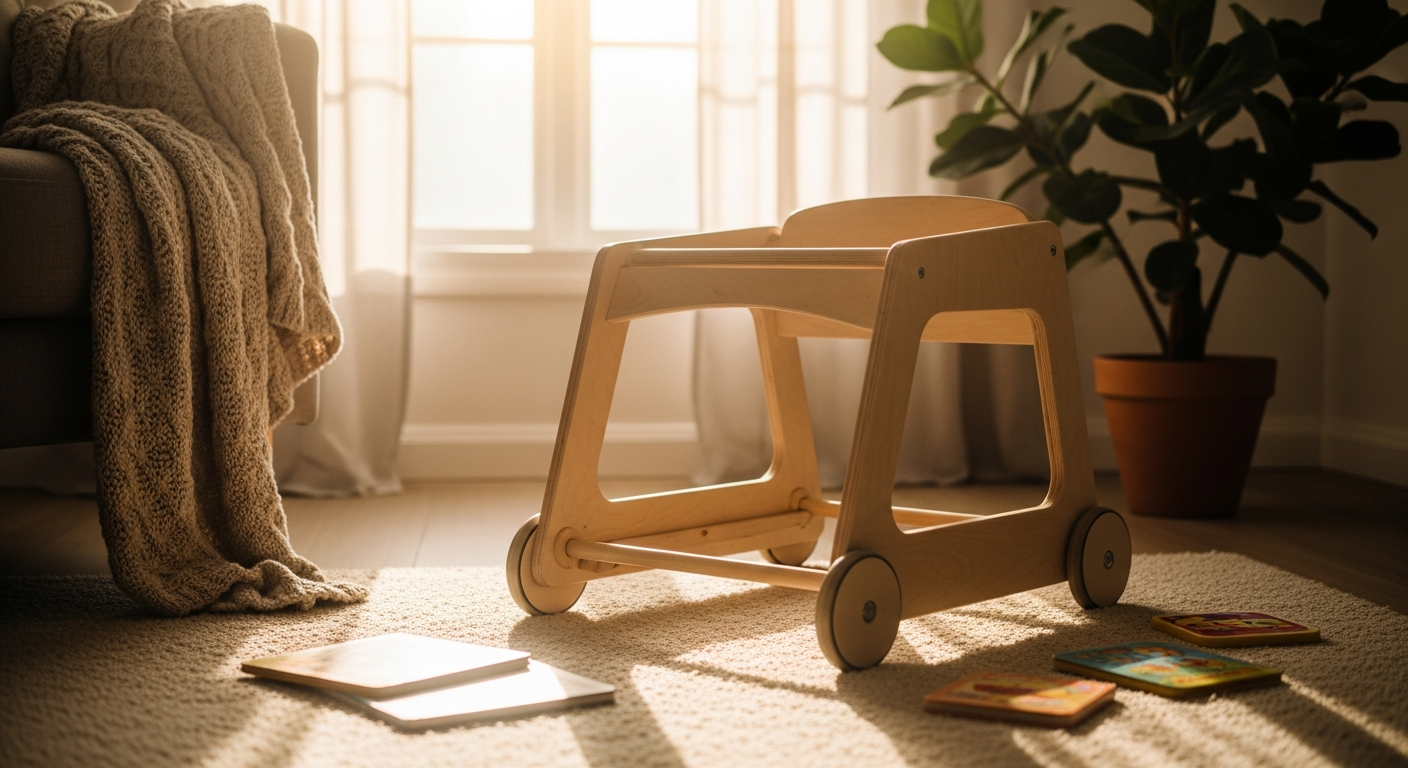
3. Offer Your Hands, Not a Walker
Hold their hands and walk together. Baby walkers, despite the name, don’t actually help—and research suggests they may even delay walking.
4. Use Encouragement, Not Pressure
Place a favorite toy just out of reach to motivate them to move. But don’t push. Babies walk when they’re ready, and pressure can backfire.
5. Celebrate Every Tiny Win
A few seconds of standing? That’s amazing. One wobbly step? Incredible. Your encouragement builds their confidence way more than you might think.
Common Walking Myths—Let’s Clear Them Up
Myth 1: Baby Walkers Help Babies Walk Sooner
Nope. Studies show they can actually delay walking and pose serious safety risks. The AAP advises against using them.
Myth 2: Walking Early Means a Smarter Baby
Not true. There’s no link between when a child walks and their cognitive development. Every child develops at their own pace.
Myth 3: Shoes Help Babies Learn to Walk
Barefoot is best indoors. Shoes are really just for protection outdoors. Inside, let those little feet feel the floor.
Myth 4: You Should Practice Walking Every Day
Babies don’t need formal practice sessions. They learn through play and exploration. Just give them safe space and freedom to move.
What Comes After Those First Steps?
Once your baby takes those magical first steps, the journey is just beginning. Over the next few months, they’ll:
- • Walk more steadily and confidently
- • Start running (hold on tight!)
- • Learn to walk backward
- • Begin climbing stairs
- • Try jumping
Each of these skills builds on the last. And just like with walking, every child hits these milestones on their own timeline.
Final Thoughts — Trust Your Baby’s Pace
Watching your baby learn to walk is one of the most incredible parts of parenthood. But it’s also one of the most nerve-wracking if you’re constantly comparing your child to others.
The truth is, there’s a wide range of normal. Some babies walk at 9 months; others don’t until 17 or 18 months—and both are perfectly fine.
Your job isn’t to rush them. It’s to give them a safe space, some encouragement, and the freedom to figure it out on their own timeline. They’ll get there. And when they do, those first wobbly steps will be worth every bit of the wait.
Trust the process. Trust your baby. And if you ever have real concerns, don’t hesitate to talk to your pediatrician. That’s what they’re there for.
광고

DCT Family Guide · Laurent’s Mom · Last updated 2026-04-29
Hands-on reviews from a Korean mother of two.
Personal experience-based. Product, policy, and price details may change over time — verify with the source before purchase.
💬 Frequently Asked Questions
❓ What age should I be concerned if my baby isn’t walking yet?
According to the updated CDC guidelines from 2022, most babies walk by 18 months, not 12 months like the old milestone suggested. If your child isn’t walking by 18 months or you notice they’re not pulling to stand or cruising furniture, that’s when you should talk to your pediatrician about a developmental screening.
❓ Do baby walkers actually help babies learn to walk faster?
No, research shows baby walkers don’t help and may actually delay walking development. Babies learn best through barefoot practice on the floor, which helps with balance, brain stimulation, and building the right muscles for walking.
❓ What’s the difference between cruising and actually walking?
Cruising is when your baby walks sideways while holding onto furniture or other objects for support—it’s one of the key signs they’re getting ready to walk independently. Independent walking happens when they can take steps without holding onto anything, which usually comes a few weeks or months after they start cruising.
❓ Is it normal for my 16-month-old to still be cruising but not walking alone?
Yes, that’s completely normal. The new developmental guidelines show that babies can take their first independent steps anytime between 9 and 18 months, and cruising is actually one of the positive readiness signs that walking is coming soon.