This post contains affiliate links. As an Amazon Associate, I earn from qualifying purchases. Your price is not affected. Affiliate Disclosure
광고
Advertisement
Key Takeaways
- Ideal baby room temperature is 18-22°C (64-72°F), humidity 40-60% (pediatric recommendation)
- Winter heating + humidifier combo is most challenging — watch for over-humidification and mold
- Ultrasonic humidifiers risk white dust and bacteria; natural evaporative types recommended
- Place hygrometer within 1m of baby’s crib, check hourly as a habit
- Summer AC: never direct airflow — point toward wall, use fan to circulate air
After our first baby was born in December 2023, I kept the nursery at 18°C all winter, but heat rash appeared every night. Only after the pediatrician said “baby’s body temperature matters more than room temperature” did I start properly monitoring our thermometer. Now I manage temperature, humidity, and air circulation as a set each season, and I’ve compiled the tips I learned along the way.
If you’ve had a winter birth or are facing summer heat for the first time, you’ve probably had similar concerns. I’m sharing my humidifier mistakes honestly too.
Why Should Baby Room Temperature Be 18-22°C?
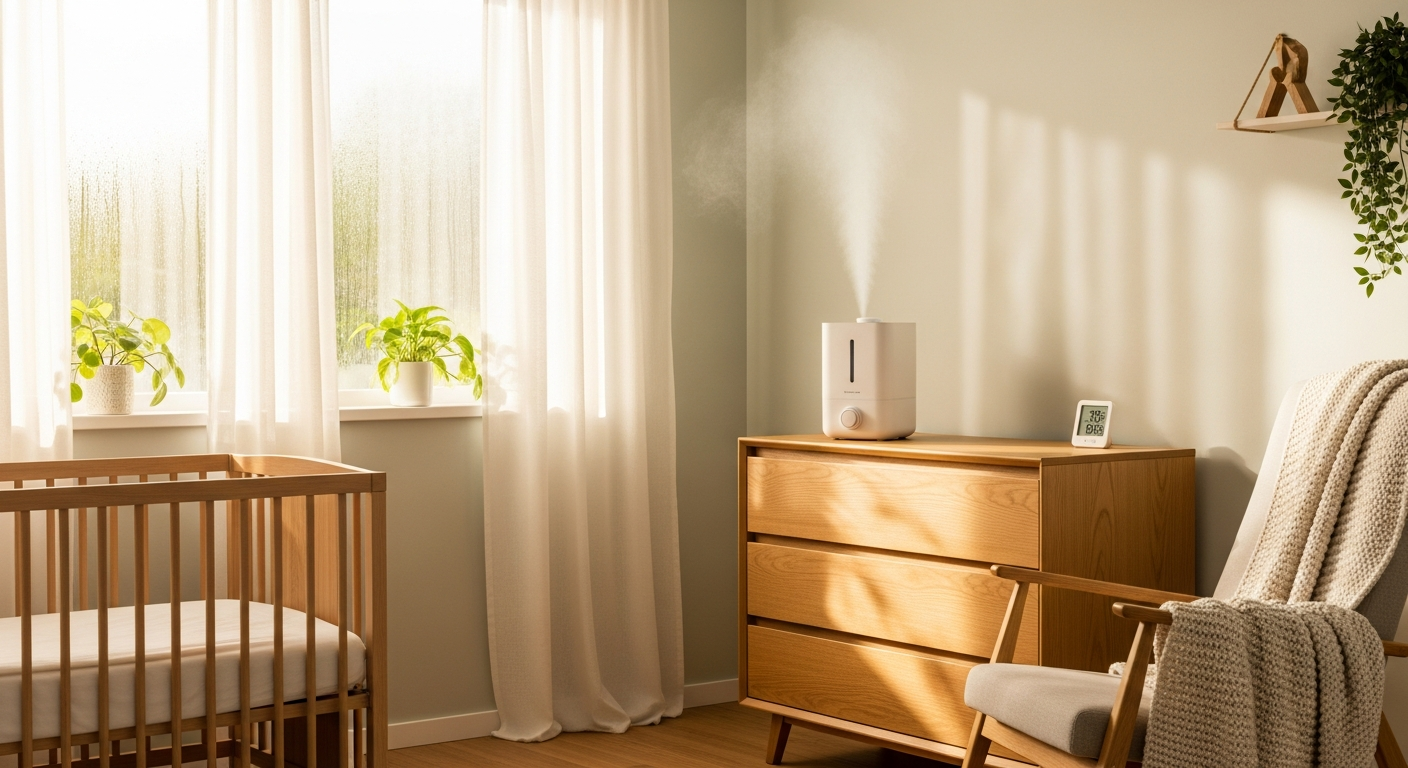
Place hygrometer within 1m of baby’s crib, away from direct sunlight
The Korean Pediatric Society recommends an indoor temperature of 18-22°C (64-72°F). Newborns have immature temperature regulation. When room temperature exceeds 25°C (77°F), risks of heat rash and dehydration increase; below 16°C (61°F), hypothermia and respiratory issues can develop.
At first, I thought “if it feels a bit cold for adults, it must be cold for baby too.” In reality, my baby was sweating profusely under the blanket. When I set winter heating to 23°C and added a sleep vest, I found a damp back at dawn. After that, I developed a habit of keeping a thermometer by the crib and checking every hour.
The optimal humidity range is 40-60%. When it drops below 30%, nasal membranes dry out, leading to frequent nosebleeds and coughing. Above 70%, mold and dust mite breeding risks increase. During winter heating, humidity can easily drop to 30%, making a humidifier essential — but this is where many mistakes happen.
Seasonal Temperature & Humidity Management — Spring, Summer, Fall, Winter
Spring & Fall (March-May, September-November)
This period has temperature swings of 10°C or more. During the day, open windows for ventilation; when evening temperatures drop, turn on heating gently to maintain around 20°C. Humidity naturally stays around 50%, so humidifiers usually aren’t needed.
However, on days with heavy dust or air pollution, I close windows and run an air purifier, which drops humidity below 40%. In those cases, I hang laundry indoors or place a water bowl on the opposite side of the crib.
Summer (June-August)
Set AC to 24-26°C (75-79°F). Never direct airflow at baby — point it toward the wall. A ceiling fan helps circulate cool air evenly. Ventilate for 10 minutes every 2 hours. Summer humidity typically runs 60-70%, so I use a dehumidifier or AC dehumidifying mode.
Last summer, I lowered the AC to 22°C and ran it all night. In the morning, my child had a stuffy nose and cough. The pediatrician said “when indoor-outdoor temperature difference exceeds 5°C, it strains the respiratory system.” Since then, if outdoor temp is 32°C, I keep indoor at 27°C, maintaining that ratio.
Winter (December-February) — Most Challenging Period
When heating is set to 20-22°C, humidity drops below 30%. Running a humidifier brings it to 60%, but two problems emerge. First is over-humidification. When humidity stays above 65% for more than 2 hours, condensation forms on window frames and wallpaper, and mold spores float in the air.
Second is white dust phenomenon. Ultrasonic humidifiers disperse minerals from water as white powder that settles on furniture and floors. Research shows this can be dangerous if inhaled into baby’s lungs. I initially used an ultrasonic humidifier, saw white deposits around the crib, and immediately switched to a natural evaporative type.
“Turn off winter humidifiers as soon as humidity hits 55%. Above 60%, open windows to ventilate.”
In winter, ventilate three times daily (morning, midday, evening) for 10 minutes each. Even with cold air coming in, heating quickly recovers the temperature. Without ventilation, CO2 levels rise and baby wakes frequently during sleep.
Advertisement
광고
Humidifier Types: Pros & Cons — Ultrasonic vs Steam vs Evaporative
Natural evaporative humidifiers are quiet with no white dust concerns
| Type | Price Range | Pros | Cons |
|---|---|---|---|
| Ultrasonic | $30-80 | Affordable, raises humidity quickly | White dust & bacteria risk, daily cleaning required |
| Steam/Warm Mist | $50-120 | Boils water, bacteria-free | High electricity cost, burn risk, noisy |
| Natural Evaporative | $80-250 | No white dust, self-regulating humidity, safest | Expensive, filter replacement needed, slower humidification |
For baby rooms, I strongly recommend natural evaporative humidifiers. They draw in air, pass it through a wet filter, and release moisture naturally. No white dust, no boiling water hazards, and they stop adding moisture when room humidity reaches the set level.
The downside is the upfront cost of $100-200 and filter replacement every 3-6 months (around $20-40). But considering this is equipment used in a space where your baby spends most of their time, I think it’s worth the investment.
Essential Items for Temperature & Humidity Management
1. Digital Hygrometer — Must-Have, Not Optional
Get a model that displays both temperature and humidity on one screen. Place it within 1m of baby’s crib, away from direct sunlight or heating vents. Smart models that connect to your phone and send alerts when levels go out of range are convenient.
I use two: one by the crib and one at the opposite corner. Sometimes there’s a 3-5°C difference between spots. The crib-side reading is what matters.
2. Air Circulator or Ceiling Fan
Especially in winter and summer when you can’t open windows often, stagnant air causes uneven temperature distribution. Point a fan at the ceiling on low speed to gently circulate air throughout the room. Never aim it directly at baby.
3. Blackout Curtains or Thermal Blinds
In summer, afternoon sun can raise room temperature by 5°C or more. Blackout curtains block heat and help baby sleep. In winter, they prevent warm air from escaping through windows, improving heating efficiency.
Common Mistakes & How to Fix Them
Mistake 1: Over-Dressing Baby Because You Feel Cold
The “one more layer than adults” rule is a myth. At 20°C room temperature, a onesie plus sleep sack is sufficient. Check baby’s neck — if it’s damp or hot, remove one layer immediately. Overheating increases SIDS risk.
Mistake 2: Running Humidifier 24/7 in Winter
I made this mistake. I ran it continuously, and after a week, black mold appeared on the window frame. Now I turn it off when humidity reaches 55%, ventilate when it hits 60%, and clean the humidifier with vinegar every 3 days.
Mistake 3: Closing All Windows in Winter for Fear of Drafts
Without ventilation, CO2 and indoor pollutants accumulate. Even in freezing weather, open windows for just 5-10 minutes three times daily. Take baby to another room during ventilation to avoid direct cold air exposure.
Mistake 4: Believing Thermometer Readings 100%
Even if the thermometer shows 20°C, check baby’s actual body temperature. Touch the back of the neck, chest, and back. If damp or overly warm, lower room temperature by 1-2°C or remove a clothing layer. Every baby has different comfort zones.
Advertisement
Real Experience: One Year of Managing Our Baby’s Room
Our baby is now 13 months old, and we’ve gone through all four seasons. Here’s what actually worked:
- Winter: Heating at 21°C, natural evaporative humidifier to 50-55%, ventilate 3x daily for 10 minutes, one-piece pajamas + sleep sack
- Summer: AC at 26°C, dehumidifier or AC dry mode to maintain 50-55% humidity, circulator fan on low at ceiling, short-sleeve onesie only
- Spring/Fall: Windows open during day, light heating in early morning/evening to 19-20°C, long-sleeve onesie + thin blanket
Most importantly, I stopped comparing our baby to others. Some babies are comfortable at 18°C, others at 22°C. Observe your baby’s signals — sweating, frequent waking, cold extremities — and adjust accordingly. That’s what matters most.
“Thermometers are guidelines. Your baby’s body is the real thermometer.”
Final Checklist: Baby Room Temperature & Humidity Management
✅ Daily Checklist
- Maintain room temperature at 18-22°C (64-72°F)
- Keep humidity at 40-60%
- Check baby’s neck temperature by touch 3-4 times daily
- Ventilate for 10 minutes, 2-3 times daily
- Clean humidifier tank every 2-3 days
- Ensure no direct airflow (AC, fan, heater) toward baby
- Replace filters (air purifier, humidifier) on schedule
Managing baby room temperature and humidity isn’t complicated once you establish a routine. Check the thermometer hourly at first, and after 2-3 weeks you’ll develop an intuitive sense. What seemed overwhelming becomes second nature.
If you found this helpful, check out our baby room air purifier guide and sleep environment setup tips. Wishing you and your baby comfortable, healthy days ahead!
광고

DCT Family Guide · Laurent’s Mom · Last updated 2026-04-28
Hands-on reviews from a Korean mother of two.
Personal experience-based. Product, policy, and price details may change over time — verify with the source before purchase.
💬 Frequently Asked Questions
❓ Can I just use a bowl of water instead of buying a humidifier for my baby’s room?
A bowl of water can help slightly during mild dryness in spring or fall, but it won’t raise humidity enough during winter heating when levels drop to 30%. For consistent humidity control between 40-60%, you’ll need an actual humidifier—just avoid ultrasonic types that create white dust and bacteria risks.
❓ My baby’s hands and feet always feel cold at night—should I increase the room temperature?
Cold hands and feet are completely normal for babies and don’t mean they’re too cold. Check the back of their neck instead—if it’s warm or damp, they’re actually overheating and you should remove a layer or lower the temperature.
❓ How often do I really need to check the thermometer and hygrometer in the nursery?
Checking every hour might sound excessive, but temperature and humidity can shift quickly with heating or AC cycles, especially during season changes. Place both devices within 1 meter of the crib and glance at them whenever you check on your baby—it becomes a quick habit.
❓ Where exactly should I point the AC if not at the crib, and will the room still cool down?
Point the AC vents toward a wall, not directly at your baby, and use a ceiling fan or standing fan to circulate the cool air around the room. This prevents direct cold airflow on your baby while still maintaining the target temperature of 24-26°C throughout the space.