광고
As an Amazon Associate, we earn from qualifying purchases. Your price is never affected. Full affiliate disclosure.
광고
⚡ Quick Summary
- Transitional objects signal normal development — Attachment to a specific blanket or toy isn’t pathological, but a healthy process toward psychological independence.
- Begins at 8-12 months, normal through preschool (age 5) — Most children naturally reduce dependence through peer influence.
- Prepare for washing and loss — Having two identical items and rotating them prevents crisis situations.
- Preschool/daycare use requires situational judgment — Helpful during initial adjustment, but gradually reduce with teacher collaboration.
- Excessive attachment after age 6 may need professional help — If daily life is disrupted or severe anxiety occurs, consult a child psychologist.
“Mommy, I can’t sleep without Bunny!”
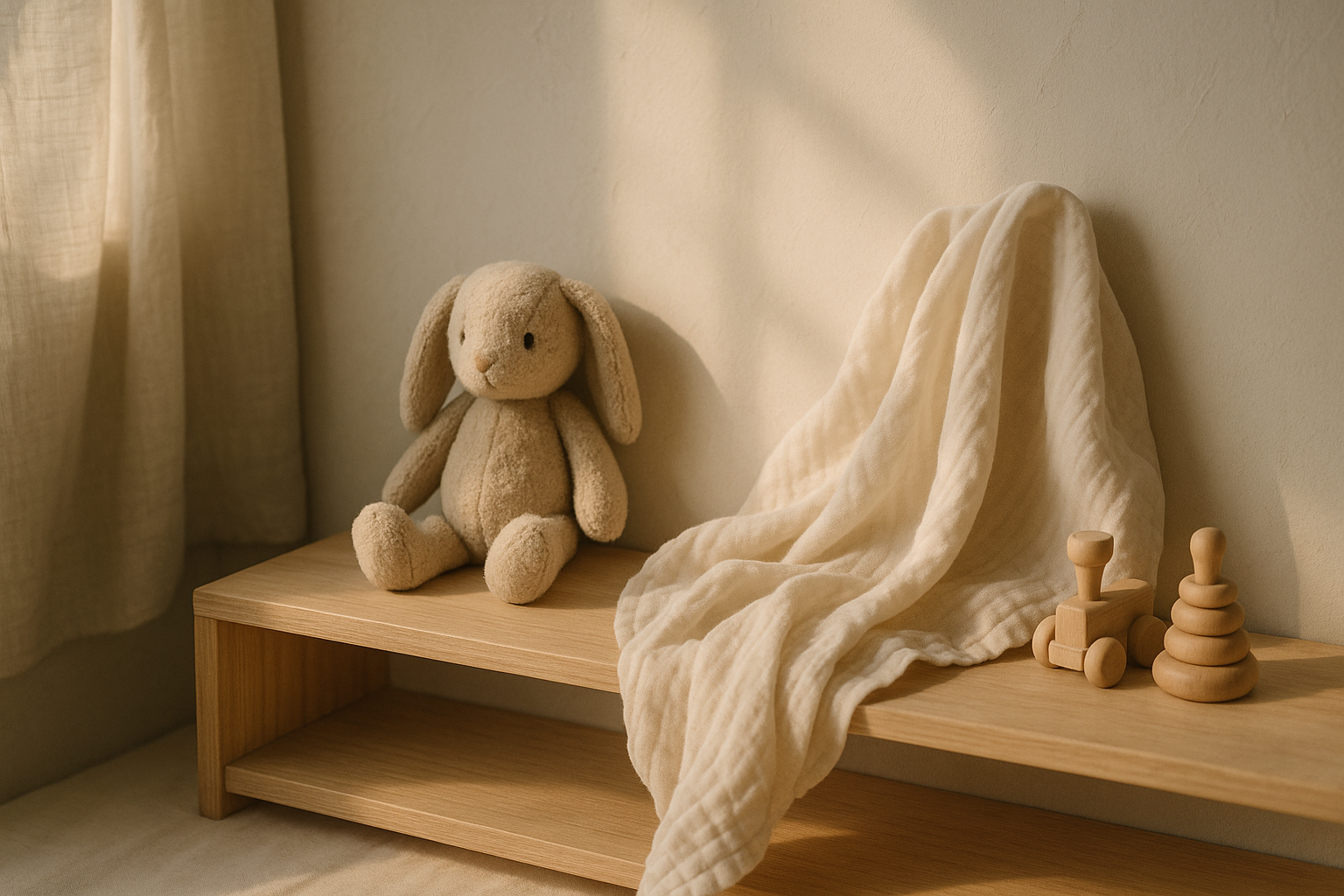
Three-year-old Min-jun absolutely cannot fall asleep without his worn-out bunny toy. If you take it away even briefly for washing, he cries inconsolably, and it must come along on every outing. Min-jun’s mother worries: “Is it okay for him to be this dependent? How long will this last?”
Does your child also show unusual attachment to a particular blanket, toy, or towel? Don’t worry. This is a very normal developmental process. Today, we’ll scientifically understand this phenomenon through the ‘transitional object’ theory of British pediatrician and psychoanalyst Donald Winnicott.
1. What Is a Transitional Object — A “Bridge” Between Mother and World
In 1951, Donald Winnicott introduced the term ‘transitional object.’ This concept describes blankets, soft toys, and pieces of cloth to which babies often develop intense and persistent attachments.
A transitional object is a material object (typically something soft—a piece of cloth or part of a stuffed toy) to which the infant assigns special value, helping them make the necessary transition from the early oral relationship with mother to true object relations.
Why is it called ‘transitional’?
What interested Winnicott was the area between thumb-sucking and the teddy bear, between early oral eroticism and true object relationships, between subjectivity and objectivity, between inside and outside. The transitional object is neither inside nor outside, neither here nor there. In other words, for the baby, this object has special meaning—existing in that ‘middle’ realm, neither mother nor completely an external object.
Winnicott theorized that this attachment to transitional objects represents an essential stage of ego development and leads to the establishment of a sense of self. In other words, a child’s attachment to a toy or blanket isn’t a sign of weakness, but a healthy process of psychologically separating from mother and establishing their own identity.
2. When Does It Start (6-12 Months) and Until What Age Is It Normal (Through Preschool)
When does it begin?
According to Winnicott’s infant observations, between 4 and 12 months of age, children often form attachments to specific objects and assign them primitive meaning. Most children make this selection between 8-12 months of age and continue to depend on this special object for several years thereafter.
Children often form attachments to transitional objects between 4 months and 2 years of age, though some develop them earlier or later. This attachment can persist through the preschool years, and in some cases continues into adulthood.
Until what age is it normal?
Between ages 2 and 5, children are likely to give up their transitional objects. By around age 5, children may reduce their dependence on their attachment object (lovey).
Usually around age 5, when peer friends stop using transitional objects in public, your child will also stop. However, there’s no need to worry if the object continues to play a role during stressful times through elementary school and into adolescence. They may return to it for a bit of comfort when they don’t want to seek reassurance directly from parents.
Children with transitional objects have been shown to be more independent than those without! This is the opposite of what many parents fear.
3. Why That Specific Object — The Combination of Smell, Texture, and Memory
“Why that old bunny toy? Even when I buy an identical new one, they refuse it.”
The selection of a transitional object is a highly personal and mysterious process. It’s true that the piece of blanket (or whatever it is) symbolizes a part-object such as the breast. But its point lies in its actuality rather than its symbolic value. The fact that it is not the breast (or mother) is as important as the fact that it represents the breast (or mother).
The importance of smell
Winnicott summarized the characteristics of transitional objects, noting above all that the infant claims rights over it, cuddles and mutilates it, and insists it must never change. It’s precisely this “must never change” characteristic that makes children reject freshly washed, like-new toys. The familiar smell, texture, and shape are the very essence of the object.
Texture and sensory experience
As confirmed in studies with children on the autism spectrum, specific objects can provide certain sensory input based on individual sensory preferences. In certain environments, these sensory stimuli can provide a sense of security and regulation, especially in environments where sensory input can be overwhelming. In some cases, the texture, temperature, and visual appeal of an object can trigger positive sensory responses, reinforcing attachment to that specific object.
Memory and emotional connection
A transitional object is not just a thing. It symbolizes the child’s safe relationship with mother, warm moments, and comforting memories. Children exposed to their transitional object in a new play environment played and explored without showing anxiety for the same duration as children with their mothers in the room, and longer than children without current object attachment. Therefore, the presence of the child’s special object may have the effect of reducing arousal while facilitating exploration in new and moderately stressful situations. Of course, Harlow’s early monkey experiments also showed similar fear reduction and exploration patterns in the presence of an inanimate cloth surrogate “mother” when exposed to fear-inducing stimuli. Object attachment can be thought of as a protective factor. Although this inanimate object cannot provide reassurance, guidance, or affection, its presence provides the child with a sense of protection.
광고
4. Managing Washing, Loss, and Damage Crises (Backups and Gradual Replacement)
True story: Child who didn’t sleep for 3 days after losing toy — Mother’s solution
Last year, Kim Eun-jung (pseudonym, 35) from Seoul experienced an accident during a family trip when her son Jun-ho’s (age 4) attachment toy “Teddy” was left behind at their accommodation. Jun-ho barely slept for three nights and refused to eat. Eun-jung hurriedly purchased a new toy of the same brand, but Jun-ho rejected it, saying “This isn’t my Teddy!”
Fortunately, the accommodation found Teddy and sent it by delivery, and only upon receiving the toy again did Jun-ho regain stability. After this experience, following expert advice, Eun-jung purchased two more identical toys and began rotating their use.
Prevention is best: The duplicate strategy
You can make things easier by having two identical transitional objects. This way you can wash one while using the other, sparing your baby (and yourself) a potential emotional crisis and a worn-out attachment object.
If your baby chooses a large blanket as a transitional object, you can easily cut it in two. Babies have little sense of size and won’t notice. If they choose a toy, find a duplicate as soon as possible. If you don’t rotate them from early on, your child may reject the second one because it feels too new and unfamiliar.
Have at least two identical attachment objects and rotate frequently. Leaving your child’s attachment object at a restaurant, losing it during a family vacation, or realizing at bedtime that it’s in the washing machine can be stressful for both parent and child. Rotating weekly allows everything to have the same degree of wear. You want all attachment objects to be equally loved, cuddled, and washed so they feel and smell the same to your child.
Washing tips
When washing is needed, machine wash and dry on low heat. Use mild detergent and set the washer to delicate mode. Follow these steps and air dry for a clean attachment object. Once dry, redistribute the filling to restore its original shape.
Just as overwatering a plant kills it, washing an attachment object too often can cause it to fall apart. Thorough washing should be spaced out. During the week, spot cleaning is sufficient, but space deep cleaning accordingly. The only exception to consider is when your child is sick. Once they start feeling better, you should sneak away the attachment object to refresh it and eliminate germs.
What to do if lost
Follow your child’s lead. Don’t immediately offer to replace the object. See if your child forms an attachment to a new transitional object on their own. Let your child choose directly. Help your child attach to a new transitional object. Talk about how the new object is the same as the previous one. Help your child see how the new object can provide comfort.
광고
5. Is It Okay to Bring to Preschool or Daycare — Situational Judgment
Helpful during initial adjustment
Transitional objects refer to items such as blankets, dolls, or pacifiers that provide comfort and stability to children during periods of separation from primary caregivers or when facing new experiences. These objects serve as a bridge between the child’s dependence on caregivers and the development of self-soothing and independence. They play an important role in alleviating anxiety and promoting a sense of security as children navigate various developmental stages and transitions.
The daycare experience can be a stressor for young children as it involves early separation from attachment figures and the familiarity of the home environment, continuous peer interaction, and limited focused adult attention. Given this, parents, daycare providers, and children themselves use various means to provide children with a sense of security and continuity. A well-known but under-researched developmental phenomenon in young children is their tendency to become strongly attached to inanimate objects, typically soft and cuddly toys or blankets. Children’s use of objects is particularly noted in situations where they are stressed or vulnerable: unfamiliar environments, when upset, sick, or tired.
Transitional object attachment was about half as common among children attending childcare institutions. Children attending half-day daycare were significantly less likely to attach to objects compared to those attending full-day daycare. This suggests that longer separations increase the need for transitional objects.
Gradually reducing use
Allow the attachment object for the first few weeks, but work with teachers to follow these steps:
- Stage 1 (Weeks 1-2): Allow all-day possession
- Stage 2 (Weeks 3-4): Use only during naptime and difficult moments
- Stage 3 (Weeks 5-8): Keep in cubby and take out only when needed
- Stage 4 (After 2-3 months): Attempt to leave at home
Don’t suddenly cut your child off from the object. Also, don’t try to take it away during stressful times like the arrival of a new baby or moving. Perhaps wean gradually by limiting use to car rides or your child’s room.
Communication with teachers is key
Tell the preschool or daycare teacher:
- The name and significance of your child’s attachment object
- When they need it most (e.g., naptime, separating from parents)
- Request cooperation to prevent loss
- Share plans for gradual independence
6. When Is Professional Consultation Needed (Excessive Attachment After Age 6)
Normal range of attachment
Transitional objects are a completely normal part of development and should not be discouraged. They provide children with a self-soothing mechanism that promotes emotional resilience.
Warning signs
Consider consulting a child psychologist in the following cases:
1. Age inappropriateness
This post contains affiliate links. As an Amazon Associate, I earn from qualifying purchases. Your price is not affected.
If a child over age 7-8 continues showing intense, inseparable attachment to an object in daily life, professional evaluation may be helpful.
2. Severe functional impairment
- Refusing to attend school or social activities without the object
- Extreme panic or prolonged distress (over an hour) if temporarily separated
- Significant developmental delays in other areas
- Complete inability to function in daily activities without the object
3. Accompanied by other concerning behaviors
- Extreme social withdrawal or isolation
- Repetitive behaviors or rituals beyond normal attachment
- Self-harm or aggressive behavior when object is unavailable
- Regression in previously achieved developmental milestones
4. Parent gut feeling
If you feel something is different from normal development, trust your instincts. Early consultation is always better.
What professionals can help with
Child psychologists or developmental specialists can:
- Assess whether attachment is within normal developmental range
- Rule out underlying anxiety disorders or other conditions
- Provide strategies for gradual, healthy separation
- Support the whole family through the transition
- Address any co-occurring developmental or emotional concerns
Conclusion: Trust Your Child’s Natural Development
Your child’s beloved blanket or worn-out stuffed animal isn’t a problem to solve—it’s a sign of healthy psychological development. As Winnicott showed us, these transitional objects are bridges that help children navigate the complex journey from complete dependence to independence.
Most children will naturally outgrow their intense attachment by school age, especially with gentle support and peer influence. Until then:
- Honor the object’s importance to your child
- Keep duplicates for washing and emergencies
- Allow flexibility during stressful transitions
- Trust the natural developmental process
- Seek professional help only if truly concerning signs appear
Remember Min-jun and his bunny? That attachment is helping him develop emotional resilience, self-soothing skills, and the foundation for healthy independence. So the next time you see that ratty old toy, smile—it’s doing important developmental work.
Has your child formed a special bond with a transitional object? What’s been your experience? Share your stories in the comments below!
광고
📚 Related reads
💬 Frequently Asked Questions
❓ What if my child refuses to let me wash their blanket even when it’s dirty?
Buy an identical backup blanket and start rotating them from the beginning, washing one while your child uses the other. If you only have one, try washing it during naptime so it’s dry by bedtime, or involve your child in the process by letting them ‘help’ put it in the washer and check on it together.
❓ My 7-year-old still sleeps with their stuffed animal every night. Should I be concerned?
If they only use it at bedtime and it doesn’t interfere with school, friendships, or daily activities, it’s generally fine—many children keep comfort objects into elementary school. However, if they can’t function without it during the day, experience severe anxiety when separated from it, or if it’s affecting social situations, consider consulting a child psychologist.
❓ Should I force my child to leave their blanket at home when going to preschool?
During the initial adjustment period, allowing the blanket can actually help reduce separation anxiety and make the transition smoother. Work with the teacher to gradually limit its use—perhaps keeping it in the cubby for naptime only, then eventually just for the first week of school or during particularly stressful days.
❓ What happens if we lose the special blanket or toy?
Losing a transitional object can be genuinely distressing for a young child, similar to losing a friend. Acknowledge their grief, offer comfort, and help them choose a new special item if needed—though understand it may take time for them to bond with a replacement the same way.

광고
DCT Family Guide · Laurent’s Mom · Last updated 2026-04-23
Hands-on reviews from a Korean mother of two.
Personal experience-based. Product, policy, and price details may change over time — verify with the source before purchase.