This post contains affiliate links. As an Amazon Associate, I earn from qualifying purchases. Your price is not affected. Affiliate Disclosure
Thank you for reading this post, don’t forget to subscribe!광고
Advertisement
⚡ Quick Summary
- Timing · March-April spring season, immune support essential
- Age · Toddlers 12+ months to age 5
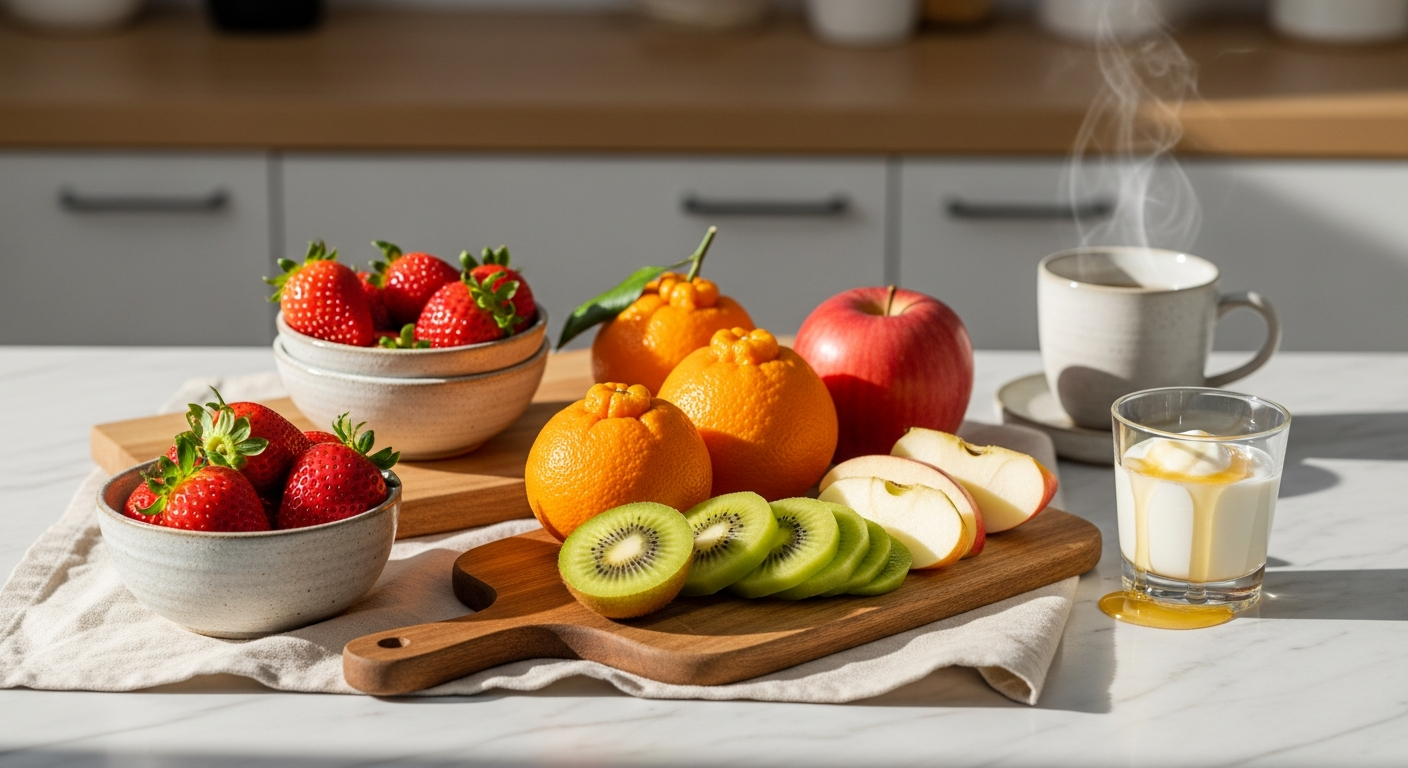
- Key Fruits · Strawberries, oranges, kiwi, apples, pears, bananas, blueberries
- Pro Tips · Blend with skin for extra fiber, mix with yogurt for probiotics
- Best For · Picky eaters or kids who catch frequent colds at daycare
My 37-month-old Laurent kept getting sick at daycare. Twice a month he’d spike a fever, and he’d cough all night. Our pediatrician said, “During seasonal changes, give him vitamin C-rich seasonal fruits every day.”
That’s when I switched to spring fruits like strawberries and citrus for snacks. At first I just cut them up, but he wouldn’t eat them. But when I mixed them with yogurt, froze them into popsicles, and topped pancakes with them, he asked for them every day.
About two weeks in, his daycare teacher said, “Laurent seems so much healthier lately.” A month later, he hadn’t caught a single cold. Now a daily fruit smoothie is part of our morning routine.
This Post Is For You If…
- Your child attends daycare/preschool and catches colds frequently
- You’re dealing with a picky eater who refuses fruits and vegetables
- You buy seasonal fruit but don’t know how to serve it
- You’re looking for natural snacks without artificial additives
Selection Criteria
- Seasonal Availability — Peak nutrition March-May, easy to find locally
- Immune Nutrients — Vitamin C, beta-carotene, polyphenol content
- Kid Appeal — Based on Laurent’s preferences and parent community feedback
- Prep Convenience — Can be prepared in under 5 minutes
- Allergy Safety — Safe for 12+ months, common allergens excluded
1. Strawberries — Vitamin C Powerhouse, Just Wash and Serve
“Just 5 strawberries provide an adult’s daily vitamin C requirement”
— Rural Development Administration, National Institute of Horticultural Science
The quintessential spring fruit. Laurent calls strawberries “red candy.” March through May is peak season, so you’ll find affordable local berries at the market during this time.
Strawberries contain about 80mg of vitamin C per 100g—more than oranges. If your child eats just 5-7 berries a day, he or she will get nearly all the vitamin C needed for immune cell production.
✅ Pro Tip — Remove the stems and soak strawberries in baking soda water for 1 minute, then rinse under running water. No pesticide worries. Let your child help wash them—they’ll be more likely to eat them.
What I Loved:
- Just wash and serve—saves 5 minutes during busy morning prep
- Sweet-tart flavor appeals to kids with no resistance
- Chop and mix with yogurt or cereal for picky eaters
- Freeze for up to a month—great for smoothies
Being Honest:
- Some kids dislike the seeds (Laurent was fine with them)
- Organic can cost $10+ per pound, which adds up
- They soften within a day at room temp—refrigeration essential
Price Range: Regular strawberries $10-15 per 2 lbs / Organic $20-30 per 2 lbs (April 2026)
Recommended For: 12+ months, kids who enjoy tart flavors, parents who make yogurt snacks regularly
💡 Note — According to the Rural Development Administration, strawberries are rich in anthocyanins, antioxidants that help activate immune cells.
2. Oranges — Easy to Peel, Kids Can Eat Independently
Premium citrus varieties peak in March-April. They’re larger than regular oranges with thicker skin that’s easy for little hands to peel.
Laurent calls them “big oranges.” He loves peeling them himself. I just score the skin in a cross pattern with a knife, and he does the rest. Great for fine motor development too.
These oranges contain about 50mg of vitamin C per 100g. Less than strawberries, but since one fruit weighs around 200g, a single orange provides 100mg of vitamin C.
What I Loved:
- Thick skin peels easily—even 3-year-olds can eat independently
- Juicy texture provides hydration along with nutrients
- Nearly seedless, making them convenient to serve
- One fruit is filling enough for a complete snack
Being Honest:
- Costs twice as much as regular oranges ($0.75-$1 per fruit)
- High sugar content—limit to 1-2 per day to avoid blood sugar spikes
- Juice squirts on clothes during peeling—laundry hassle
Price Range: 2 lbs (4-5 fruits) $6-10 (April 2026)
Recommended For: 18+ months, kids who enjoy hands-on activities, parents who want to encourage self-feeding
Advertisement
광고
3. Kiwi — Fiber Champion, Essential for Constipated Kids
Gold kiwis from New Zealand are in season now. They’re less tart and sweeter than green kiwis, making them more appealing to children.
Laurent initially rejected them, calling it “the fuzzy fruit.” But when I cut one in half and let him scoop it out with a spoon, he said it was “like eating ice cream” and loved it.
Kiwis have twice the vitamin C of oranges. One gold kiwi (100g) contains about 160mg. They’re also fiber-rich, making them especially beneficial for constipated children.
✅ Pro Tip — Cut kiwis in half and let your child scoop them out with a spoon—they’ll find it playful and fun. Blend with skin on for smoothies to triple the fiber content.
What I Loved:
- Laurent’s constipation improved within 2 weeks of daily kiwi
- Gold kiwis have mild tartness—no resistance from kids
- Scooping with a spoon is fun—encourages self-feeding habits
- Stores 5 days at room temp, 2 weeks refrigerated
Being Honest:
- Green kiwis are very tart—kids under 3 may refuse them
- Juice can cause slight tingling around the mouth (due to enzymes)
- Gold kiwis cost about $1.50 each—pricey option
Price Range: Gold kiwis 6-pack $7-10 / Green kiwis 6-pack $4-6
Recommended For: Constipated children, 24+ months who tolerate tartness, kids practicing spoon skills
4. Apples — Year-Round Availability, Pectin for Gut Health
In spring, you’ll find stored apples—mostly Fuji varieties. They’re crisp and sweet, making them popular with kids.
Laurent calls apples “crunch” because he loves the sound they make when he bites them. I serve them sliced thin with the skin on—that’s where the polyphenols are concentrated.
Apples are rich in pectin, a soluble fiber that feeds beneficial gut bacteria, indirectly supporting immune function. While vitamin C is modest (5mg per 100g), apples are easy to incorporate daily.
What I Loved:
- Available year-round with stable pricing (around $0.50 per apple)
- Eating with skin provides chewing practice plus fiber
- Sliced apples keep 3 days in an airtight container (lemon juice prevents browning)
- Low allergy risk—most kids 12+ months can eat them
Being Honest:
- Lower vitamin C than other fruits—not sufficient alone
- Skin requires baking soda wash if you’re concerned about pesticides
- Cut apples brown quickly, which looks unappealing
Price Range: Fuji apples 10 lbs $15-20 (about $0.50 per apple)
Recommended For: All kids 12+ months, children learning to chew, parents seeking budget-friendly snacks
5. Pears — High Water Content, Great for Coughs and Colds
Asian pears remain available through spring from cold storage. With 88% water content, they’re excellent for throat dryness.
When Laurent had a cold, I blended pears with a touch of honey. His cough decreased noticeably. Traditional medicine also recommends pears for clearing the lungs.
While vitamin C is low (3mg per 100g), pears contain anti-inflammatory compounds like luteolin that actually help soothe sore throats and reduce coughing.
⚠️ Caution — Don’t give honey to children under 12 months due to botulism risk. For younger babies, serve plain blended pear.
What I Loved:
- Noticeably soothed Laurent’s nighttime cough during colds
- High water content keeps kids hydrated when they’re sick
- Naturally sweet—no added sugar needed
- Soft texture works for kids with sore throats
Being Honest:
- Lower immune-supporting nutrients compared to citrus or kiwi
- Grainy texture bothers some children
- Ripens and spoils quickly—buy only what you’ll use within days
Price Range: Asian pears 5 lbs $8-12 (about $1 per pear)
Recommended For: Kids with coughs or sore throats, 12+ months, children who prefer mild, sweet flavors
6. Bananas — Portable, Energy-Boosting, Perfect for Busy Days
While not strictly seasonal, bananas are available year-round and provide quick energy—perfect for active toddlers.
Laurent calls them “yellow sticks.” I keep bananas in my diaper bag because they come in their own wrapper and don’t need refrigeration.
Bananas are rich in potassium and vitamin B6, which support immune function. They also contain prebiotics that feed healthy gut bacteria—your child’s “second immune system.”
What I Loved:
- Ultimate convenience—peel and eat, no washing or cutting
- Naturally sweet, universally loved by kids
- Perfect pre-outdoor play energy boost
- Mash for younger babies, slice for older toddlers
Being Honest:
- Can be constipating if overeaten (limit to 1 per day)
- Bruises easily in bags
- Low vitamin C—pair with citrus for balanced nutrition
Price Range: Bananas $0.50-0.70 per lb (about $0.20 per banana)
Recommended For: All ages 6+ months, on-the-go snacking, pre-exercise energy
7. Blueberries — Antioxidant Superstars, Brain Development Bonus
Fresh blueberries peak in late spring. Their deep color signals high anthocyanin content—powerful antioxidants that strengthen immunity.
Laurent calls them “tiny balls” and loves their pop-in-your-mouth quality. I sometimes freeze them for a cool summer treat.
Research shows blueberries support cognitive development in young children while simultaneously boosting immune response. They’re one of the few fruits that do both.
✅ Pro Tip — Frozen blueberries are just as nutritious as fresh and often more affordable. Add them frozen to yogurt or oatmeal—they’ll thaw while adding a cool element kids love.
What I Loved:
- No prep needed—rinse and serve
- Perfect size for toddler fingers, encourages self-feeding
- Frozen blueberries last months and retain nutrients
- Mix into pancakes, muffins, or smoothies easily
Being Honest:
- Fresh blueberries are expensive off-season ($6-8 per pint)
- Can be a choking hazard for babies under 9 months (quarter them)
- Stain clothes and high chairs—keep wipes handy
Price Range: Fresh blueberries $4-8 per pint / Frozen $6-10 per lb
Recommended For: 9+ months (quartered), brain development support, kids who love finger foods
Quick Recipe Ideas
- Morning Power Smoothie: 1 banana, 5 strawberries, ½ cup blueberries, ½ cup yogurt, blend
- Frozen Fruit Pops: Blend kiwi + apple, pour into molds, freeze 4 hours
- Yogurt Parfait: Layer yogurt with diced pears, top with crushed granola
- Fruit Pancake Toppers: Mash banana into batter, top with sliced strawberries
- Snack Plate: Apple slices + orange segments + blueberries arranged in sections
Final Thoughts: Make It Fun, Keep It Consistent
The biggest lesson I learned? Kids won’t eat healthy foods that feel like obligations. But when I made fruit fun—colorful smoothie bowls, frozen pops, “help me peel this orange”—Laurent couldn’t get enough.
We’ve been doing this for six months now. Laurent’s sick days dropped from 8 per month to maybe 1. His energy is better, his mood is brighter, and honestly, I feel better knowing he’s getting real nutrition.
You don’t need all seven fruits every week. Start with two your child already likes, then slowly introduce new ones. Mix them with familiar foods. Let your child help prepare them.
Some days he’ll devour strawberries. Other days he’ll only want bananas. That’s fine. The goal isn’t perfection—it’s building a habit of choosing real food over processed snacks.
What fruit does your child love? What creative ways have you found to serve it? I’d love to hear your tips in the comments below.
광고