💡 Quick Answer
Babies under 3 months with fever above 100.4°F require immediate emergency care, while older infants can be managed at home with humidity control, rest, and nasal suctioning.
As an Amazon Associate, we earn from qualifying purchases. Your price is never affected. Full affiliate disclosure.
광고
⚡ 3-Second Summary (TL;DR)
- If a baby under 3 months has fever above 100.4°F (38°C), go to the ER immediately — no exceptions even with cold symptoms
- Maintain indoor humidity at 40-60% and use humidifiers to help loosen mucus
- Non-medication treatments are the foundation for infant colds — plenty of rest and fluids
- Nasal aspirators can help high-risk babies under 6 months
- Call 911 for breathing difficulties (chest retractions, lips turning blue)
“Mom, I think our baby is sick”
I still vividly remember my early parenting days. It was when my 2-month-old second child suddenly started having a runny nose and cough. That night I spent checking temperatures and searching the internet, wondering “Is this just a cold, or should we go to the hospital?” I’m sure many moms have had similar experiences.
It’s especially worrying during seasonal transitions like now. There are reports showing pediatric respiratory infections have been increasing since the COVID-19 pandemic, and we often hear about RSV and mycoplasma cases around us.
Cold Symptoms by Age — Essential Things to Know
Newborns to 2 months: Never let your guard down
Fever in infants under 90 days is defined as rectal temperature of 100.4°F (38°C) or higher, and babies at this age don’t have fully developed immune systems yet. If a baby under 3 months shows fever of 100.4°F or higher, an ER visit is typically necessary.
Cold symptoms may not be clear at this age. Infants might show apnea instead of typical coughing. If they’re sleeping more than usual, not eating, or crying differently, you need to observe carefully.
3-12 months: Observing symptom changes is key
Babies have low immunity and less resistance to coughs and fever, with main symptoms including nasal congestion, runny nose, fatigue, and throat swelling.
Babies have short nasal passages with soft mucous membranes and well-developed blood vessels, and their sinuses, pharynx, and larynx aren’t fully developed, making them vulnerable to illness.
12+ months: Clearer symptom distinction possible
Colds are characterized by mild upper respiratory infection symptoms including nasal congestion, runny nose, sneezing, sore throat, and cough, with management goals focused on symptom relief and complication prevention until natural recovery.
Safe Home Management Methods
Humidity control is most important
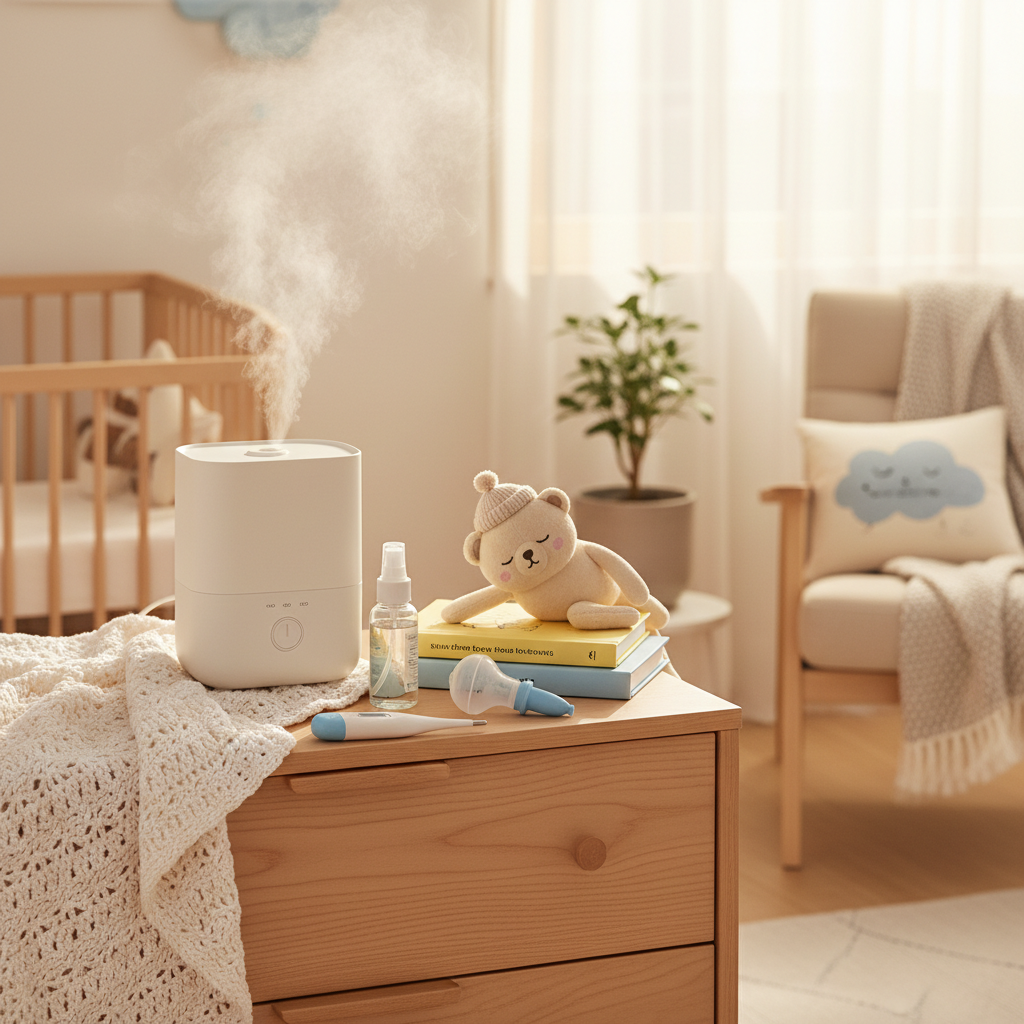
Maintain indoor humidity in the 40-60% range, being careful not to exceed 60%. Humidity helps thin mucus and aids in its removal.
Especially, humidity below 40% can worsen respiratory symptoms, while above 60% can cause mold and dust mite problems, so finding the right balance is important.
Nasal aspirators: When and how to use them?
Nasal aspirators are mainly for high-risk babies under 6 months. Professionals use saline drops and suction catheters to remove mucus, and at home you can carefully use commercially available nasal aspirators.
However, overuse can damage nasal membranes, so only use when necessary and clean thoroughly before and after use.
Hydration and rest
Remember that non-medication treatment is the main therapy for infant colds. Adequate fluid intake (breast milk or formula) and rest in a comfortable environment are most important.
Medication use: Is it really necessary?
AAP and expert recommendations
Most cold medication research is done on adults, and evidence for children is limited and conflicting. There have been reported deaths related to cough and cold medications in infants, so we need to be even more cautious.
Most experts recommend non-medication supportive care as the main treatment for infant colds. Even fever reducers should only be used when absolutely necessary after consulting with a doctor.
광고
When to visit the hospital? ER visit criteria
When to go to the ER immediately
- Fever of 100.4°F (38°C) or higher in babies under 3 months
- Breathing difficulties: chest retractions with each breath, or lips/face turning blue
- Difficulty breathing
- Altered consciousness, strange behavior, being withdrawn or less alert than usual
When pediatric care is needed
- Cold symptoms with breathing difficulties, ear pain, or rapid/difficult cough lasting more than 10 days
- Fever lasting more than 3 days
- Refusing feeds two or more times in a row or not eating well
- Signs of dehydration: fewer tears when crying, fewer wet diapers, dry mouth, sunken fontanelle
When you can wait and observe
For babies 4-6 months and older, observe for feeding refusal, inconsolable continuous crying, labored breathing, lack of wet diapers, and if these symptoms aren’t present, you can wait and observe a bit longer.
RSV and other respiratory virus precautions
RSV is especially dangerous for babies under 2 years, as their respiratory systems are still developing so they can become severely ill, and it produces a lot of mucus that may require suction treatment in the ER.
In Korea, Nirsevimab, a long-acting monoclonal antibody, was approved in April 2024 to help prevent RSV. High-risk babies should consult with their pediatrician.
Special seasonal care methods
Traditional medicine views children’s lungs and spleen as being in an incomplete state, and pediatric cough symptoms are varied and easily affected by environmental factors like temperature changes.
During seasonal transitions, minimize indoor-outdoor temperature differences and dress appropriately for temperature regulation when going out. Avoiding sudden temperature changes inside the home is also important.
Frequently Asked Questions
Q: Do we have to go to the hospital when baby gets a cold?
A: If under 3 months old, definitely go to the ER for fever of 100.4°F or higher, and if older than that, you can observe symptoms and go to the hospital if breathing difficulties or severe symptoms appear. Most cases are adequately treated with non-medication therapy, so don’t worry too much.
Q: Are there precautions when using a humidifierr?
A: Maintain humidity in the 40-60% range, being careful not to exceed 60%. Too high humidity risks mold and bacterial growth. Clean the humidifier daily and use clean water.
Q: Is using a nasal aspirator safe?
A: It mainly helps high-risk babies under 6 months, but overuse can risk nasal membrane damage. Only use gently when absolutely necessary, and thorough cleaning before and after use is essential.
Q: When can we start giving baby cold medicine?
A: Research on cold medications for children is limited with conflicting results. There have been reported deaths related to infant cough and cold medications, so please consult with a doctor before use.
Q: What to do when one of the siblings gets a cold?
A: Experts emphasize most strongly to keep sick people away from newborns. Wash hands thoroughly and separate care if possible. Be especially careful if there’s a baby under 6 months.
References
- American Academy of Pediatrics (AAP) — Latest guidelines on pediatric health
- Korea Disease Control and Prevention Agency (KDCA) — Domestic infectious disease prevention and management guidelines
- Centers for Disease Control and Prevention (CDC) — US Centers for Disease Control and Prevention
- World Health Organization (WHO) — World Health Organization health information
- Korean Society of Infectious Diseases — Pediatric respiratory infection recommendations
- Korean Pediatric Society — Vaccination and infection control guidelines
Disclaimer: The content of this article is provided for educational purposes only and cannot replace professional medical consultation or treatment. For specific questions about your baby’s health or emergency situations, please consult with medical professionals.
광고
📚 Related reads

DCT Family Guide · Laurent’s Mom · Last updated 2026-04-20
Hands-on reviews from a Korean mother of two.
Personal experience-based. Product, policy, and price details may change over time — verify with the source before purchase.