💡 Quick Answer
Begin full baby baths after the umbilical cord falls off at 2-3 weeks, using 98.6-100.4°F water temperature and bathing 2-3 times per week to protect delicate skin.
As an Amazon Associate, we earn from qualifying purchases. Your price is never affected. Full affiliate disclosure.
광고
This post contains affiliate links. As an Amazon Associate, I earn from qualifying purchases. Your price is not affected.
⚡ Quick Summary
- Newborn bath start: Begin full baths after umbilical cord completely falls off (usually 2-3 weeks after birth)
- Water temperature: 98.6-100.4°F (37-38℃) is ideal, check temperature with your elbow
- Bath frequency: 2-3 times per week is sufficient, daily baths can harm skin
- Safety principle: Never leave baby alone, always keep one hand supporting baby
- Bath duration: Keep it short at 5-10 minutes, provide warmth and moisturize immediately after
That First Bath Day, My Trembling Heart
The day I brought my first baby home from the hospital, when the nurse said “You can give baths at home now,” I felt completely overwhelmed. The thought of putting such a tiny, fragile baby in water was truly terrifying. What if I slip and drop them? What if the water is too hot or too cold? These worries filled my head completely.
But when you know the right method, bath time can become precious bonding time with your baby. Based on the latest guidelines from the American Academy of Pediatrics (AAP), World Health Organization (WHO), and Korean Pediatric Society, let’s explore safe and enjoyable bathing methods together.
Newborn Baths: When to Start?
First Bath Timing
According to the Korean Pediatric Society and World Health Organization (WHO), newborns should have their first bath at least 6-24 hours after birth. This is to help with temperature regulation and improve breastfeeding success rates, which is important to remember.
Bathing too early can reduce skin-to-skin time between baby and mother and interfere with initial breastfeeding. One study found that delaying the first bath by 12 hours increased hospital breastfeeding success rates by 166%.
Umbilical Cord Care is Key
The American Academy of Pediatrics (AAP) recommends sponge baths until the umbilical cord falls off, which usually takes about 1-2 weeks after birth. Before the umbilical cord falls off, avoid full baths and stick to partial baths with a damp cloth. Water entering the umbilical area can cause infection risk.
The latest AAP guidelines recommend cleaning the umbilical area with warm water when necessary, and alcohol disinfection is no longer recommended. Allowing it to dry naturally seems to be the best approach.
Water Temperature: How to Get It Right
98.6-100.4°F is Optimal
Bath water temperature of 98.6-100.4°F (37-38℃) is most suitable. Korean experts also recommend water temperature of 37-38°C. This is similar to baby’s body temperature, providing comfort while staying safe.
Temperature Checking Methods
When checking temperature, use your elbow or wrist instead of your fingers. Fingers can tolerate hotter temperatures that might be too hot for baby. Using a dedicated bath thermometer allows for even more accurate temperature control.
Setting your home water heater to 120°F (49℃) or below is also an important safety measure. This way, even if hot water accidentally comes out, you can prevent serious burns.
Daily Baths vs. 3 Times Weekly: Which is Right?
Expert Recommendations
Newborns don’t need daily baths. About 3 times per week is sufficient. Bathing too frequently can actually dry out baby’s skin. The American Academy of Pediatrics also recommends bathing newborns only 2-3 times per week.
Risks of Daily Bathing
Newborn skin structure is completely different from adults. The stratum corneum is only one-third as thick as adults, and sebaceous gland development is incomplete, making it extremely sensitive to external irritation. Daily bathing can destroy the skin’s natural acidic barrier, potentially increasing risks of bacterial infection or eczema.
Our skin naturally produces oils that act as a protective barrier and hosts beneficial bacteria that help maintain health. During bathing, especially when using soap, these oils and essential microorganisms tend to be removed.
Daily Spot Cleaning
It’s good to spot clean the neck, underarms, and diaper area daily. Clean the face, neck, and other sensitive areas daily with a damp cloth, and for babies in diapers, gently clean the genital and bottom areas with a little soap.
광고
Step-by-Step Safe Bathing Process
Pre-Bath Preparation
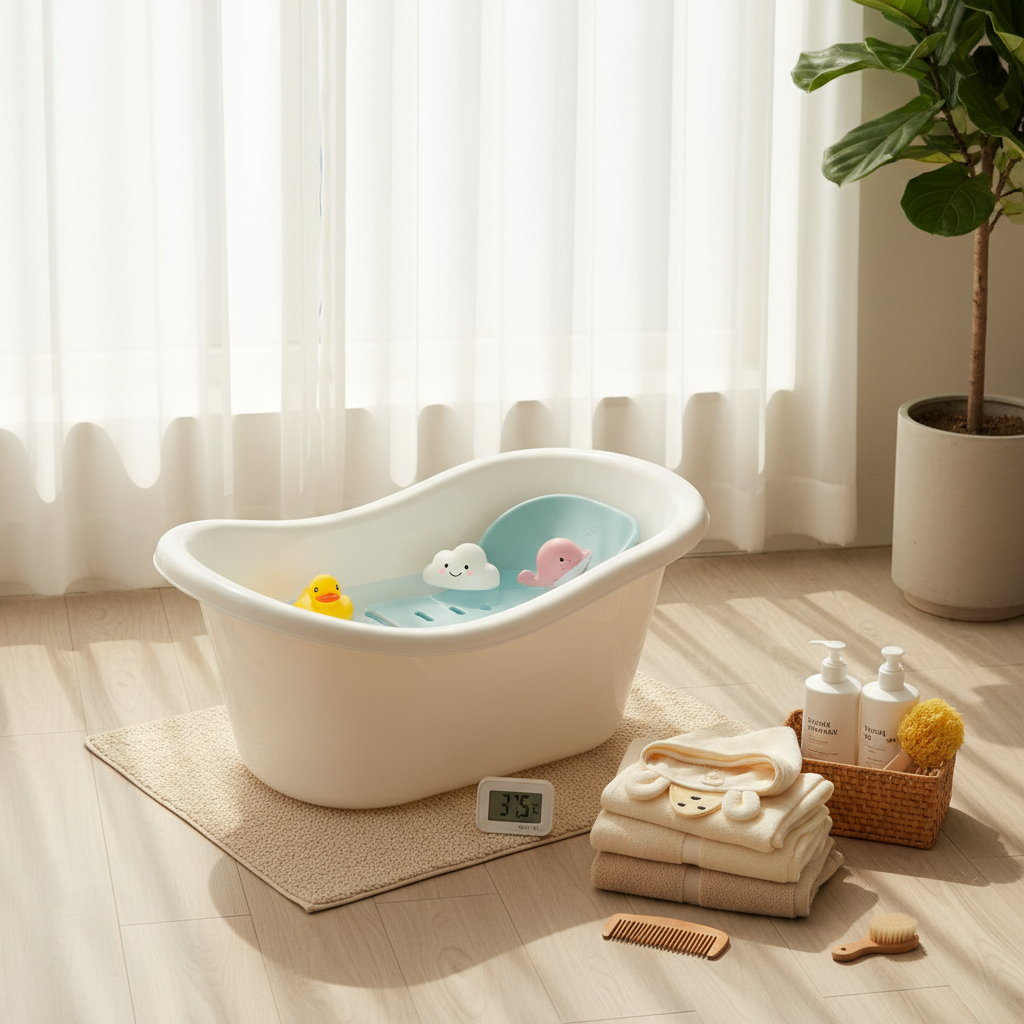
Maintain room temperature at 75-79°F (24-26°C) and close windows to block drafts. Preparing bath supplies in advance is also important: baby-specific sponge or washcloth, clean blanket or bath towel, clean diaper, clean clothes, and warm water.
Bathing Steps
The bathing sequence experts recommend: ① Clean face with soft washcloth ② Wash hair ③ Front (chest→belly→arms→legs) ④ Back (back→bottom) ⑤ Rinse thoroughly ⑥ Dry while maintaining body temperature and apply lotion ⑦ Immediately put on diaper and clothes
Most parents start with baby’s head and face, then work down to dirtier areas. This prevents soap from getting on already-rinsed areas.
Bath Duration
5-10 minutes is sufficient for newborn baths. Staying in water too long can lower body temperature and dry out skin. The key is washing quickly and wrapping up immediately.
Essential Safety Accident Prevention
Absolute Safety Rules
Never leave baby alone in the bathtub. Children can drown in just 1-2 inches of water. Don’t turn your back even briefly or leave them with another child.
Always keep one hand on baby and prepare everything you need within arm’s reach beforehand. If the phone rings or you need something, don’t leave baby alone even for seconds—take baby with you.
Bathtub Selection Precautions
Ensure all parts of the baby bathtub are functioning properly and securely attached. Collapsible tubs are convenient for storage but may be less safe than fixed ones. Many accidents involving babies’ arms, legs, or other body parts getting caught have occurred with collapsible tubs.
Be careful of protruding parts, edges, and slings (support seats). Many injuries from protruding parts have been related to fabric or mesh slings, so it’s best to avoid tubs with slings or use them with special caution.
Post-Bath Care
After bathing, quickly wrap in a towel to prevent heat loss and gently pat dry. Apply moisturizer within 3 minutes after bathing to prevent moisture loss.
Age-Appropriate Bathing Changes
Newborn Stage (0-3 months)
During this period, following the basic principles mentioned earlier is most important. Newborns don’t sweat or crawl around, so they don’t get that dirty. Bathing 2-3 times per week is sufficient.
6-12 Months
As babies grow and become more active, when they get visibly dirty, sweat, develop body odor, or after using bug spray or swimming in a pool, you may need to increase bathing frequency.
Once babies start moving more, wash their hands with soap and water before meals, and clean crawling babies’ knees and shins before naps and bedtime.
12-24 Months
At this stage, babies become more active and get dirtier more often. Daily or every other day bathing may be appropriate. However, it’s still important to monitor your child’s skin condition and adjust accordingly.
Frequently Asked Questions
Q. What if baby hates baths and keeps crying?
Check that water temperature is appropriate and slowly lower baby into water. Placing a soft cloth on their belly can provide comfort. If they still cry, shorten bath time and gradually help them adjust.
Not all babies love transitioning to full baths. If baby is fussy, try returning to sponge baths for about a week, then try again later.
Q. Do I need to use body wash?
Water alone is sufficient during newborn stage. If using body wash, choose baby-specific products (fragrance-free, mildly acidic) and use sparingly. Daily body wash use can damage the skin’s protective barrier.
Q. Can I bathe baby when they have a cold?
With mild fever, a short lukewarm bath is fine. It removes sweat and waste to keep skin clean, and can soften nasal passages to help with congestion. However, with high fever, avoid baths and use a warm damp cloth to wipe the body instead.
Q. Do I need to use moisturizer after baths?
It’s recommended. Apply moisturizer within 3 minutes after bathing to maintain skin moisture. Moisturizing is especially important for babies with eczema.
Q. What if water gets in baby’s ears?
Water entering newborn ears during baths increases middle ear infection rates. Therefore, it’s good to block water from entering baby’s ear canals with your fingers while bathing.
References
- American Academy of Pediatrics (AAP) – Baby Bath Basics Guidelines 2026
- World Health Organization (WHO) – Newborn Health Recommendations 2026
- Mayo Clinic – Baby Bath Guide 2026
- Korean Pediatric Society – Newborn Bathing Guidelines 2026
- Korea Disease Control and Prevention Agency (KDCA) – Newborn Care Guidelines
- American Academy of Dermatology (AAD) – Newborn Skin Care 2026
- Cleveland Clinic – Baby Bath Safety Guidelines 2026
- UT Southwestern Medical Center – Newborn Bathing Frequency Guidelines
- Medical News Today – Baby Bath Temperature Safety 2022
- PubMed Research – “Bathing and Beyond: Current Bathing Controversies for Newborn Infants” 2016
광고